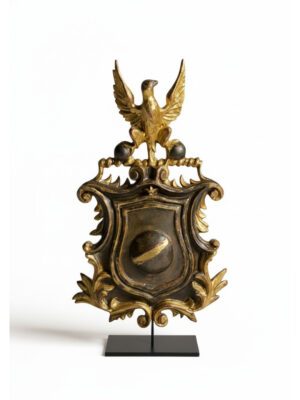
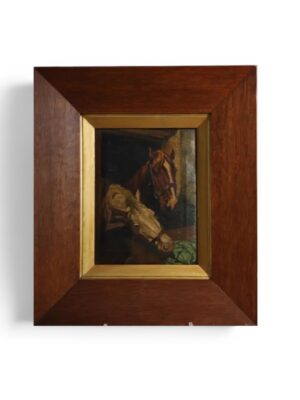
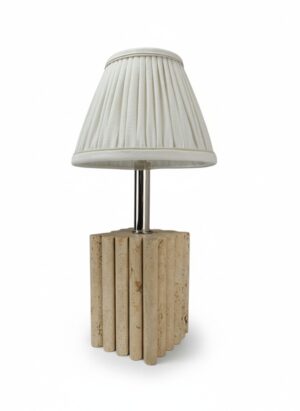
Handmade versus machine made is the distinction between objects produced chiefly by hand tools and individual skill and those made with powered machinery, and recognising it is one of the basic skills of examining antiques. Handmade pieces tend to show small irregularities, tool marks and variations, while machine-made work is typically uniform, repetitive and precise.
In furniture, useful clues include dovetails, saw marks, screws and nails. Hand-cut dovetails have slim, slightly uneven pins and scribe lines, whereas machine-cut dovetails, common from the later nineteenth century, are evenly spaced and of identical size. Pit-saw and hand-saw marks run in straight lines, while circular saws leave curved arcs. Early screws have hand-filed threads and off-centre slots, and hand-forged nails have irregular, hammered heads. Hand planing leaves gently undulating surfaces on drawer bottoms and backs. In carving, ceramics, glass and metalwork, similar signs appear as tool cuts, brushstrokes, slight asymmetry or bubbles and uneven thickness. The distinction is not always clear-cut, since many nineteenth-century pieces combine machine-prepared parts with hand finishing, and machine-made does not necessarily mean poor quality. Careful assessment of construction alongside style, wear and materials helps to establish whether a piece is genuinely old, later altered or a reproduction.