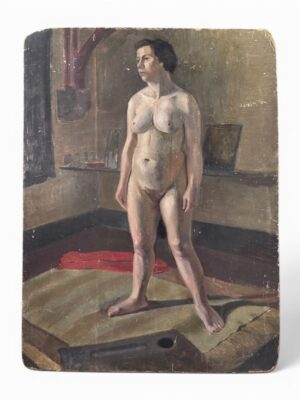
A historical painting, more often called history painting, is a painting depicting a significant event or narrative from history, classical mythology, the Bible or literature, usually with figures acting out a story of moral or heroic importance. In the academic tradition established in Europe from the seventeenth century, history painting was regarded as the highest genre, ranked above portraiture, landscape, genre scenes and still life.
The genre was championed by academies such as the French Académie royale and, in Britain, the Royal Academy, founded in 1768 under Sir Joshua Reynolds, who promoted history painting as the noblest aim of the artist. Typical subjects included battles, the deaths of heroes, royal ceremonies, scenes from Greek and Roman history and episodes from Shakespeare. Benjamin West's The Death of General Wolfe was notable for showing a recent event in contemporary dress. The Victorians produced many history paintings of national and medieval subjects, and these were widely reproduced as engravings. Large canvases can be difficult to accommodate, so smaller oil sketches and studies are often popular with collectors. Quality of drawing, composition, condition and an identified artist or subject are key factors. Historical paintings suit large halls, staircases and libraries.