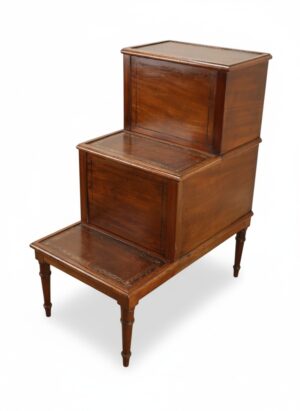
A joint stool, also called a joined stool, is a small oak stool made by a joiner using mortise-and-tenon joints secured with wooden pegs rather than glue or nails. The typical form has a rectangular top, four turned or columnar legs that splay slightly outwards, a moulded or carved apron rail below the seat and low stretchers close to the floor.
Joint stools were everyday seating in English households from the sixteenth to the late seventeenth century, when chairs were still a mark of status reserved for the head of the house. Most surviving examples date from roughly 1600 to 1700 and are in oak, though elm and fruitwood are found in provincial work. Collectors look for a good, dry colour and deep patina, crisp turnings, original pegs, wear on the stretchers from generations of feet, and a top that belongs to the base. Many were made up or heavily restored in the Victorian period, and reproductions were produced in large numbers in the twentieth century, so careful examination of the timber, joints and tool marks is essential. Genuine examples sit well beside a dresser, at the end of a bed or as an occasional table.