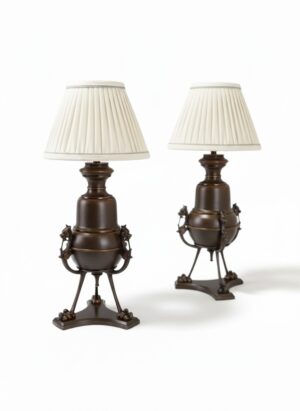
Maker's marks are the stamps, signatures, initials, labels or symbols applied to an object to identify the craftsman, workshop or firm that made it. They appear on silver, pewter, furniture, clocks, ceramics, glass, bronzes and many other antiques, and are one of the most useful tools for attribution and dating.
In British silver, the maker's mark has been a required part of the hallmark for centuries, usually as the initials of the maker or firm struck in a punch, recorded at the assay office. Pewterers used touch marks, while furniture makers such as Gillows stamped their name on drawers, and many cabinetmakers applied printed or engraved trade labels. Clockmakers signed dials and movements, potteries used printed and impressed marks, and foundries cast their names into bronzes and ironwork. Reference books record thousands of marks, enabling collectors to identify pieces and sometimes date them closely. However, marks can be worn, misleading or fraudulently added, and the name on a piece may be that of a retailer rather than the maker. Experienced buyers always consider a mark alongside style, construction and quality before accepting an attribution.