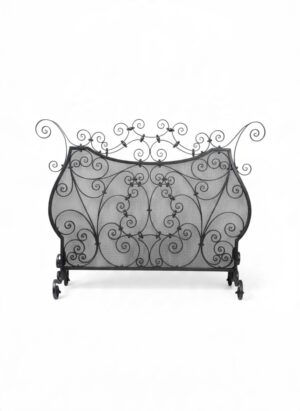
A nursery fender is a tall protective guard placed in front of an open fire to prevent children from falling into the grate or catching their clothing alight. Unlike a low decorative fender, which simply stops coals rolling onto the floor, it typically stands two to three feet high, with a brass or iron rail along the top and panels of wire mesh enclosing the front and sides.
Nursery fenders became common in British homes during the Victorian and Edwardian periods, when open coal fires heated almost every room and accidents involving children were frequent. The Children Act of 1908 made it an offence for anyone caring for a child under seven to leave it in a room with an insufficiently guarded open fire if the child was killed or seriously injured, encouraging their use. Many guards were fitted with hooks so they could be secured to the fireplace, and the flat brass top rail was handy for airing clothes and drying children's linen. Collectors look for polished brass rails, intact mesh and sound construction, and unusual serpentine or bow-fronted shapes. Today nursery fenders are valued for their practical safety as well as their period charm and suit traditional sitting rooms, kitchens and family homes.