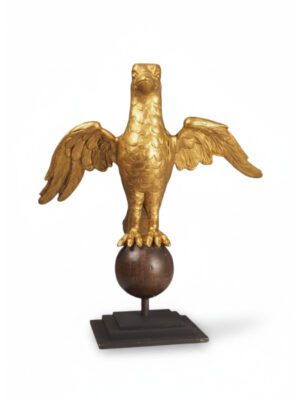
Oil gilding is a method of applying gold leaf to a surface using an oil-based adhesive, known as oil size or mordant, usually made from linseed oil. The size is brushed onto a prepared surface and left until it reaches the correct degree of tackiness, at which point the gold leaf is laid on and gently pressed down so that it adheres.
It has long been used on furniture, picture frames, mirrors, architectural ornament, signs and lettering, and it is distinct from water gilding, in which gold leaf is laid onto layers of gesso and clay bole moistened with water. Water gilding can be burnished to a brilliant, mirror-like shine, whereas oil gilding produces a softer, matt finish and cannot be burnished. However, oil gilding is more durable and resistant to moisture, making it the preferred technique for outdoor work such as gates, railings, weather vanes, clock faces and domes. Many antique frames and mirrors combine the two, with oil gilding on flat or recessed areas and burnished water gilding on highlights. Original gilding should be cleaned only by a specialist, as water and solvents can easily damage delicate gilt surfaces.