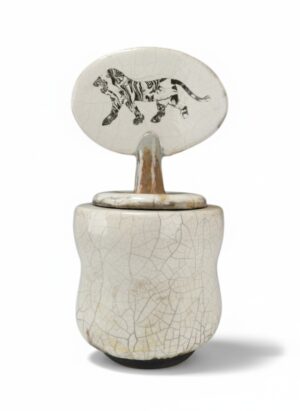
Overglaze describes decoration applied to porcelain or pottery on top of a glaze that has already been fired. The colours, known as enamels, are made from metallic oxides mixed with a glassy flux and painted or printed onto the glazed surface, then fixed in a further low-temperature firing in a muffle kiln, often several times for different colours and gilding.
Because enamels are fired at much lower temperatures than glazes, overglaze decoration allows a far broader palette than underglaze painting, which was limited for centuries largely to cobalt blue and copper red. Chinese potters developed sophisticated overglaze enamels for famille verte and famille rose wares, Japanese makers produced Kakiemon and Imari porcelains, and European factories such as Meissen, Sèvres, Chelsea, Derby and Worcester used overglaze painting and gilding for their finest pieces. Many wares combine underglaze blue with overglaze enamels and gold. Since overglaze decoration sits on the surface, it is more vulnerable to wear, scratching and fading, particularly from cutlery, dishwashers and abrasive cleaning. Collectors examine pieces under a raking light to check for rubbing, retouching and later added decoration, sometimes known as clobbering. Well-preserved overglaze enamels display a lustrous, slightly raised quality that rewards close inspection.