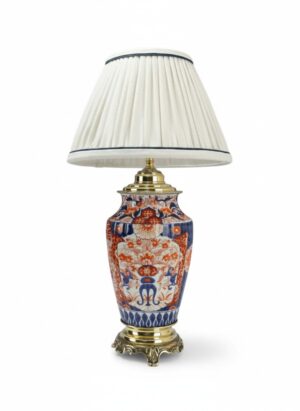
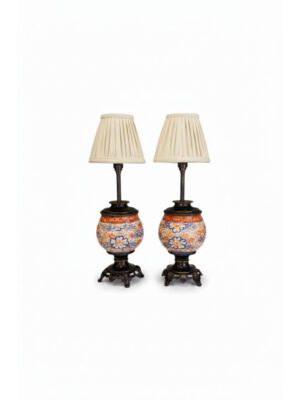
Imari porcelain is Japanese porcelain decorated in a distinctive palette of underglaze blue with overglaze iron red and gilding, often with touches of other enamels. It was made in the kilns around Arita in the Hizen province of Kyushu and takes its name from the nearby port of Imari, from which it was shipped.
Exports to Europe through the Dutch East India Company grew rapidly in the late seventeenth century, when the disruption of Chinese supplies created strong demand for Japanese wares. Imari pieces were densely decorated with flowers, chrysanthemums, phoenixes, fan-shaped panels and brocade patterns, and large jars, vases and chargers were bought to furnish European palaces and country houses. Chinese potters soon produced their own version, known as Chinese Imari, and European factories followed, including Meissen, Worcester and Derby, where Imari patterns became a long-running speciality of Royal Crown Derby. English ironstone makers such as Mason's also used the palette widely. Production of Japanese Imari continued through the nineteenth century, and much on the market dates from the Meiji period. Collectors value early export pieces, fine and balanced painting, rich gilding and good condition, and large chargers and garnitures remain popular decorative statements in period rooms.