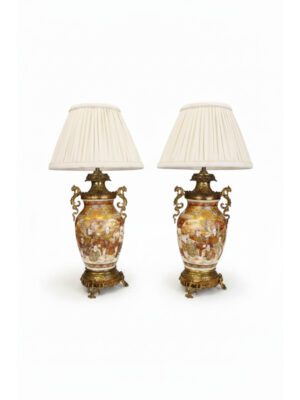
Satsuma is a type of Japanese pottery named after the former province of Satsuma in southern Kyushu. To most collectors the name means the finely crackled, ivory-glazed earthenware richly painted in coloured enamels and gilding with figures, flowers, birds and landscapes, although earlier Satsuma wares were quite different in character.
Pottery in Satsuma was established by Korean potters brought to Japan at the end of the sixteenth century, and much early production consisted of dark-glazed stoneware for local use and the tea ceremony. The enamelled cream-coloured ware developed later and came to international attention in the second half of the nineteenth century, when Japan opened to the West and its displays at international exhibitions created enormous demand. Most export Satsuma of the Meiji period was decorated not in Kyushu but in workshops in Kyoto, Osaka, Tokyo and Yokohama, and is often called Kyo-Satsuma. Output ranged from crowded, heavily gilt vases made for the export trade to exquisitely detailed miniature painting by celebrated decorators such as Yabu Meizan and the Kinkozan workshop. Collectors look for fine, precise painting, good gilding, signed and well-documented marks and freedom from damage or restoration. Satsuma vases and bowls bring warmth and colour to traditional and eclectic interiors.