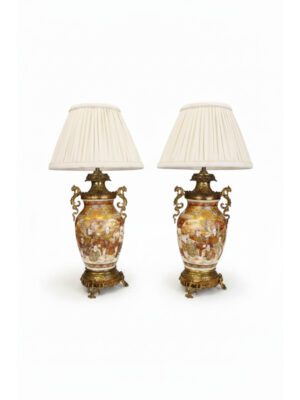
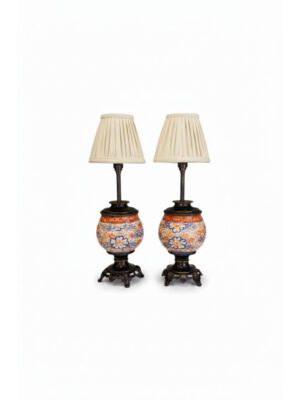
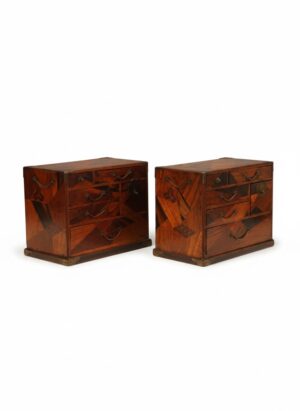
The Meiji period is the era of Japanese history from 1868 to 1912, corresponding to the reign of the Emperor Meiji. It was a time of rapid modernisation, during which Japan opened to the West, and its decorative arts became celebrated across Europe and America for their extraordinary technical skill.
The opening of Japanese ports and participation in international exhibitions created enormous Western demand for Japanese goods. Craftsmen who had previously served the samurai class turned to export markets, producing finely decorated Satsuma earthenware, cloisonne enamels, lacquer, ivory and wood carvings, inlaid mixed-metal bronzes and silver. Leading artists such as the enameller Namikawa Yasuyuki and the metalworkers associated with the Imperial household achieved remarkable precision. The influence of Japanese design on Western art was profound, shaping the Aesthetic Movement, Anglo-Japanese furniture and Art Nouveau. The quality of Meiji production varies widely, from masterpieces to mass-produced export wares. Collectors look for signatures, fine detail, crisp decoration and good condition, and should be aware that many later pieces carry Meiji-style marks. Top-quality works by recognised artists are now keenly pursued by international collectors.