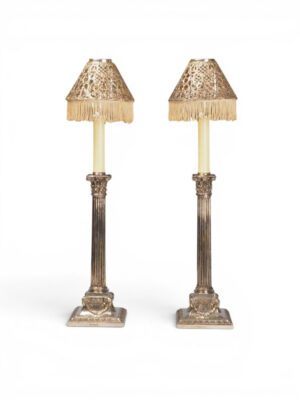
Silverware is the general term for objects made of silver or plated with silver, particularly those used at the table. In British usage it covers flatware such as spoons and forks, cutlery and serving pieces, as well as hollowware including teapots, jugs, salvers, sauce boats, candlesticks, entrée dishes and tureens.
Solid silverware in Britain is usually made of sterling standard and carries hallmarks that record its maker, assay office and date. From the mid eighteenth century, Old Sheffield Plate offered a cheaper alternative made by fusing silver to copper, and from the 1840s electroplating allowed silver to be deposited on a base metal, leading to the familiar EPNS wares of the Victorian and later periods. Flatware patterns such as Old English, Fiddle, King's and Queen's were widely made, and complete canteens of cutlery remain in demand. Collectors judge silverware on its marks, weight, condition, quality of decoration and the reputation of the maker, and avoid pieces with worn hallmarks, heavy repair or removed engraving. Regular use and gentle washing by hand do no harm, and many owners find that silver kept in use tarnishes less and develops an attractive soft lustre.