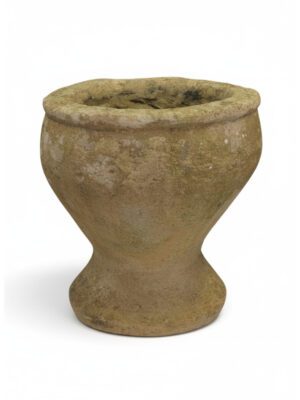
A staddle stone is a mushroom-shaped stone support consisting of a tapering pillar topped by a wider, flat circular or square cap. Staddle stones were placed in sets beneath the corners and frames of granaries, hayricks, game larders and other farm buildings to raise them off the ground and protect the stored contents from rats, mice and damp.
The overhanging cap made it very difficult for rodents to climb into the building, and air circulating beneath helped to keep grain dry. Staddle stones were used across Britain, especially in southern England, from at least the eighteenth century, and they were usually carved from local materials such as sandstone, limestone or granite, giving regional variations in colour and shape. As the buildings they supported decayed or were demolished, the stones were reused as garden ornaments, driveway markers and boundary features, and they are now sought after for gardens of every style. Genuine old staddle stones show weathering, tool marks and lichen growth, and the base and cap are often separate pieces. Modern reproductions in cast stone or concrete are common, so look closely at texture and wear.