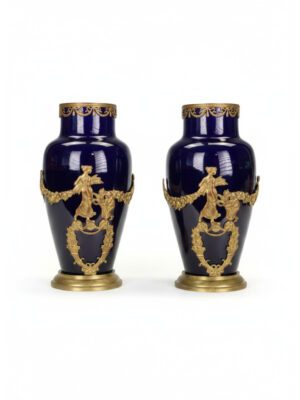
A tea service is a matching set of vessels for brewing and serving tea, typically comprising a teapot, milk or cream jug and sugar bowl, and often extended with a hot-water jug, slop bowl, tray, cups, saucers and plates. Services were made in silver, silver plate, porcelain, bone china, earthenware and stoneware.
Tea drinking became fashionable in England in the later seventeenth century, but early wares were generally bought as individual pieces. Fully matching silver tea services became common from the late eighteenth century, and by the Regency and Victorian periods three- and four-piece sets, sometimes with a kettle on a stand, were standard wedding and presentation gifts. Ceramic factories such as Worcester, Derby, Spode, Minton and Wedgwood produced extensive tea services in printed and hand-painted patterns. With silver, collectors check that every piece carries matching hallmarks, since services were sometimes assembled from different dates or makers, and they look for undamaged hinges, handles and finials. With porcelain, completeness, the absence of chips and cracks and the condition of gilding are important. Complete original services are less common than odd pieces and command a premium.