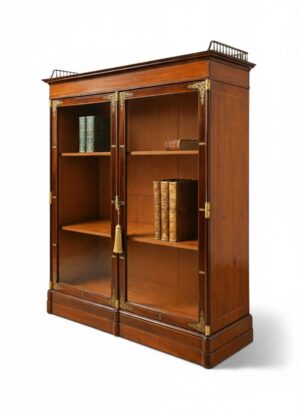
Timber is wood that has been felled, cut and prepared for use in building, joinery and furniture-making. In British usage, the term is used for wood as a working material, whether in the form of logs, planks, beams or boards, and the selection and preparation of timber has always been central to the quality of furniture and buildings.
Before use, timber must be seasoned, either naturally by air-drying over several years or, in modern times, in a kiln, to reduce its moisture content and minimise shrinkage, warping and splitting. The way a log is sawn affects both appearance and stability: quarter-sawn timber, cut radially, is more stable and reveals attractive figure in woods such as oak. Historic furniture makers used native timbers such as oak, elm, ash, beech, yew and fruitwoods, alongside imported mahogany, rosewood, satinwood and walnut. Old timber shows characteristic signs of age, including shrinkage, saw and plane marks, oxidation and patina, and reclaimed timber from old buildings is valued today for its character and sustainability.