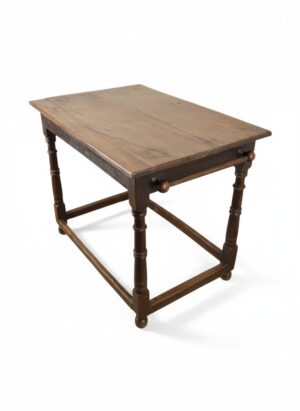
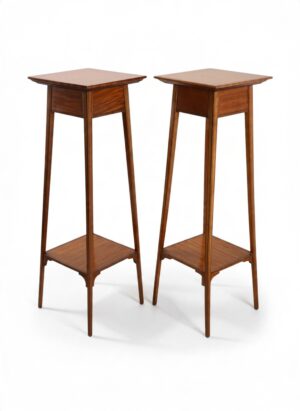
A washstand is a piece of bedroom or dressing-room furniture designed to hold a basin and jug for washing, from the period before plumbed bathrooms became widespread. Washstands typically include a top with a recess or cut-out for the basin, space for soap and toiletries, and often a lower shelf or drawers for storage.
Georgian washstands were often compact and ingenious, including corner washstands with a hole in the top for the basin and folding or lidded designs that concealed their purpose when closed. Mahogany was the usual timber. In the Victorian period washstands became larger and more substantial, frequently with marble tops and tiled splashbacks, and were made in mahogany, walnut, oak, pine and painted or grained softwood to match bedroom suites. Collectors and decorators value Georgian examples for their elegance and Victorian ones for their practicality. Points to check include the condition of the marble, which can be stained or cracked, the originality of the tiles and the soundness of the stand. Many washstands are now reused as side tables, bedside tables, plant stands or dressing tables, and some have been converted to take an inset basin for bathroom use.