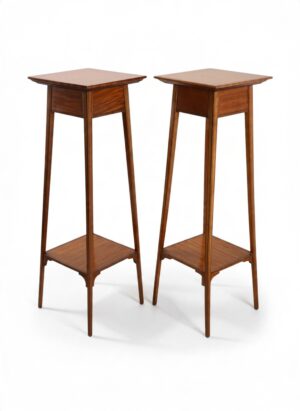
A window seat is a seat placed in or beneath a window, either built into the recess or bay as part of the joinery of a room or made as a free-standing piece of furniture. The free-standing form, sometimes called a window stool, is typically a long upholstered stool with raised, often scrolled ends, designed to fit within a window embrasure without blocking the light.
Built-in window seats are found in houses from the Tudor period onwards, often incorporated into the deep reveals of panelled rooms, and many Georgian and Victorian houses have seats beneath sash or bay windows, sometimes with hinged lids for storage. The free-standing window stool became fashionable in the later eighteenth century, when pattern books included designs in the neoclassical taste, and Regency examples in mahogany, rosewood and painted or gilded wood are particularly elegant. Collectors look for good proportions, original frames, quality carving or turning, and evidence that upholstery has been done using traditional methods. Many window seats were made in pairs for symmetrical rooms, and pairs are especially desirable. Today, both built-in and free-standing window seats create comfortable reading corners and make the most of light in period rooms.