
£2,450.00
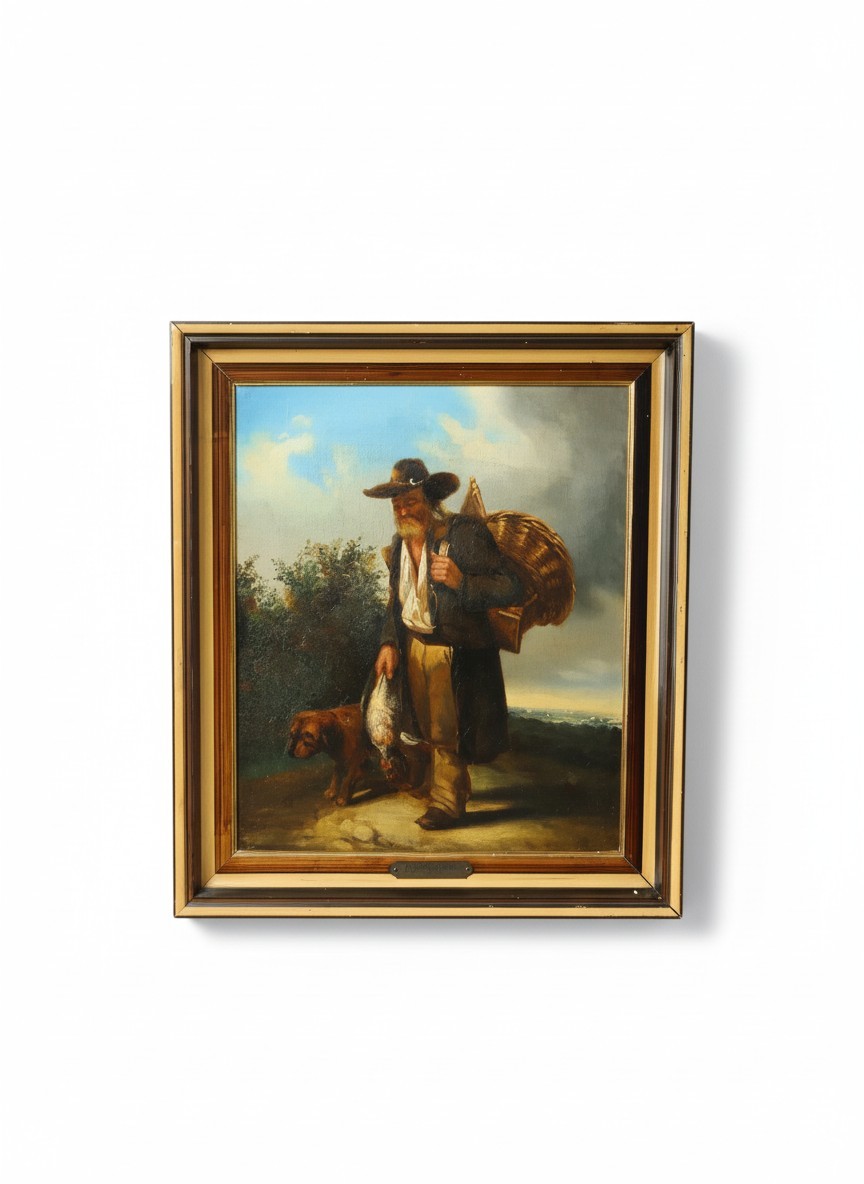
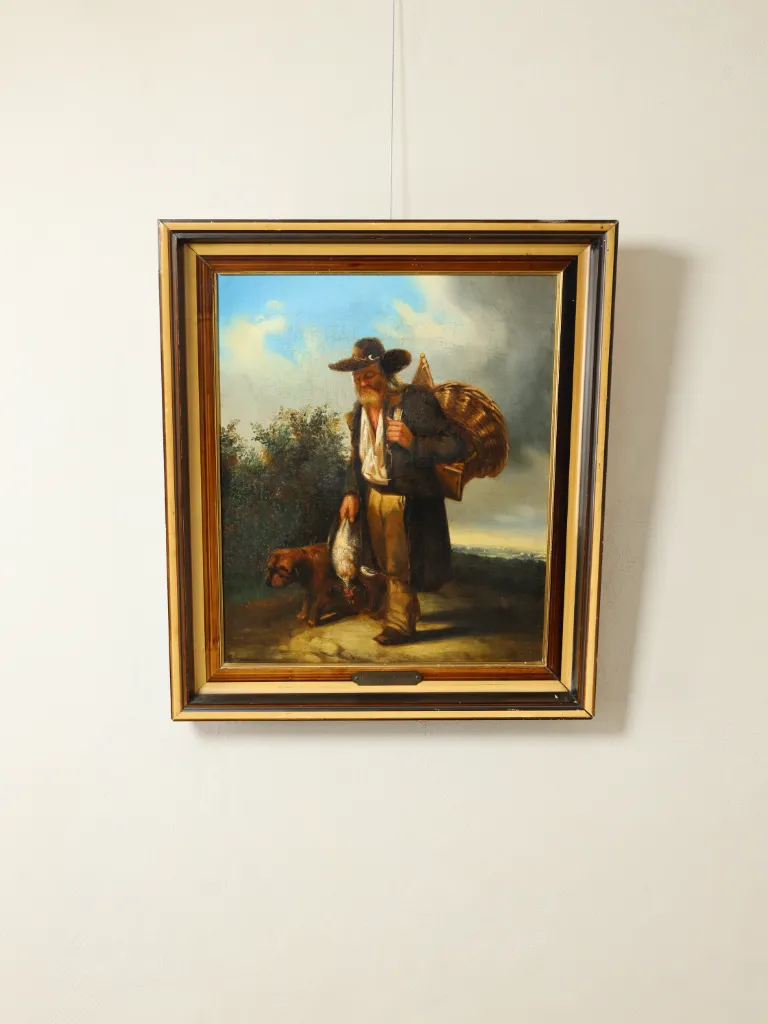
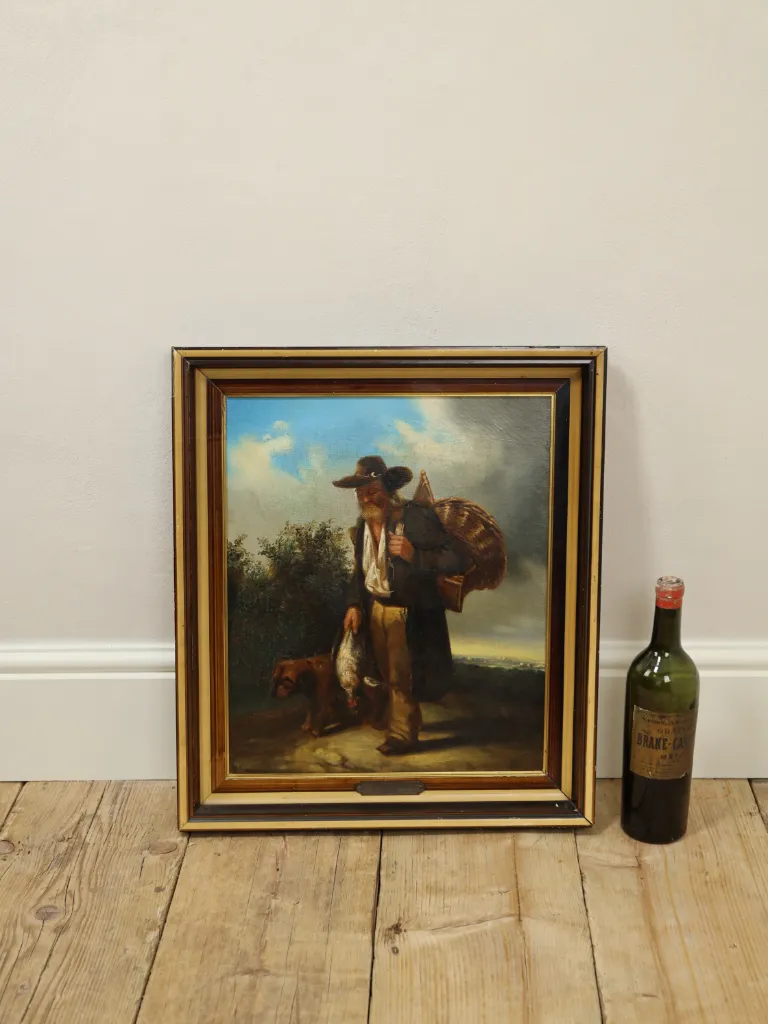
A wonderfully evocative late 19th-century oil painting by the important Belgian artist Edgard Farasyn (1858–1938), depicting one of the great characters of European rural life: a country tramp or wayfarer travelling the road with his possessions upon his back and his faithful dog at his side.



A wonderfully evocative late 19th-century oil painting by the important Belgian artist Edgard Farasyn (1858–1938), depicting one of the great characters of European rural life: a country tramp or wayfarer travelling the road with his possessions upon his back and his faithful dog at his side.
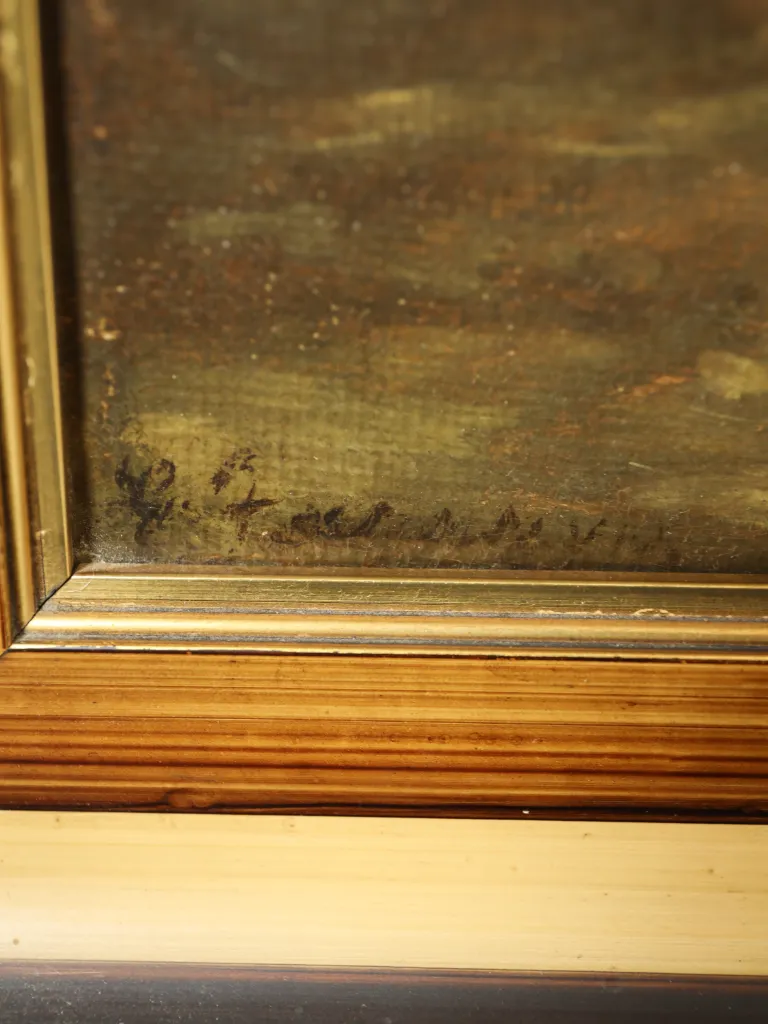
Signed by Farasyn lower left and retaining two historic handwritten references to the artist on the reverse, this is a particularly engaging figurative work combining social history, rural genre painting and animal portraiture.
Farasyn presents his traveller standing momentarily beneath an expansive blue and cloud-filled sky.
He is a wonderfully individual character.
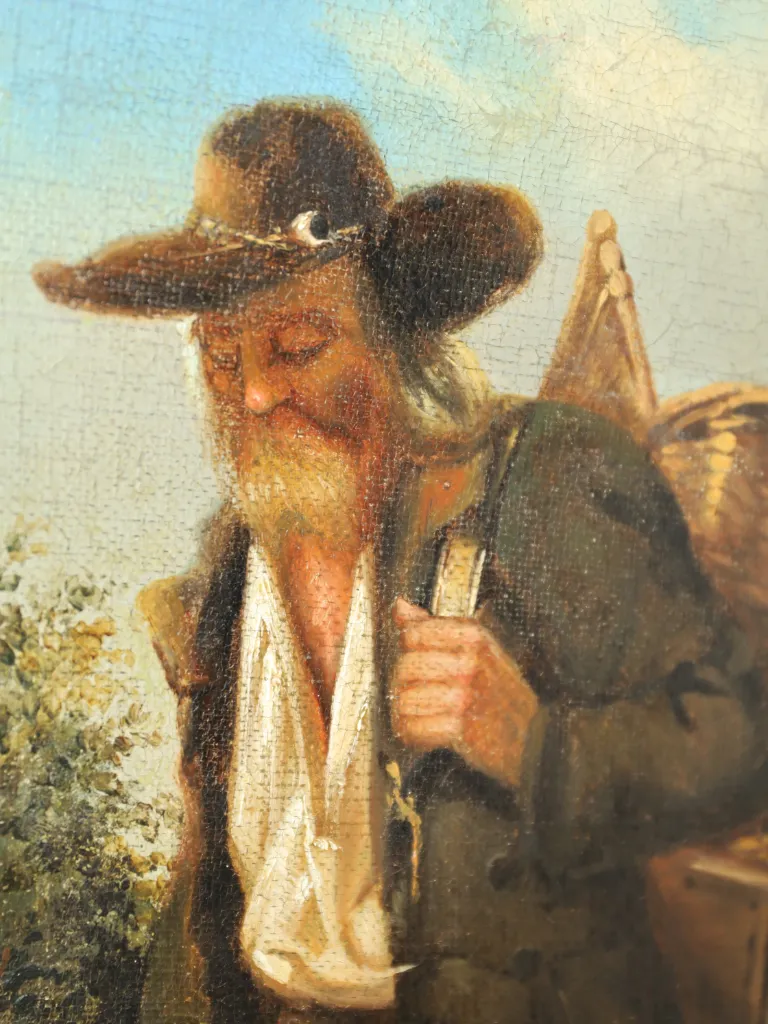
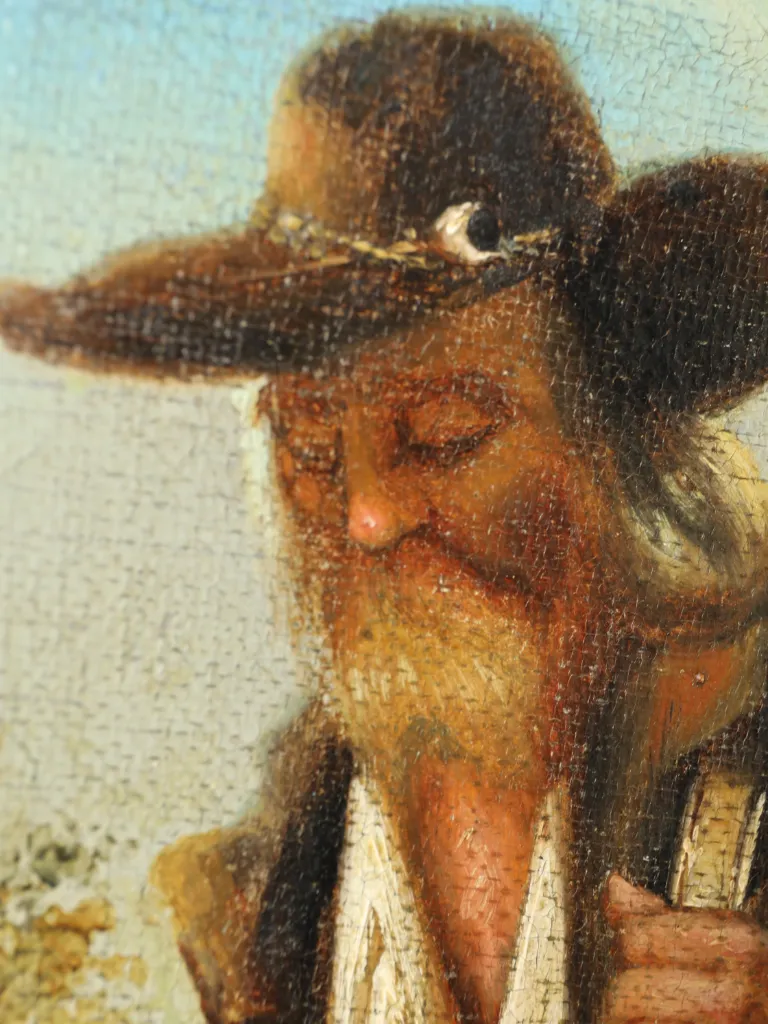
A broad-brimmed, weathered hat shades his face, beneath which emerges a long golden-grey beard. He wears a dark, well-worn coat over a loosely fastened pale shirt, practical trousers and substantial boots — the clothing of a man accustomed to travelling on foot and spending much of his life outdoors.
Across his back is an enormous woven basket, beautifully painted in warm shades of ochre and brown. Further possessions are carried about his person, while in one hand he holds a game bird.
And beside him stands his dog.
Small, stocky and wonderfully characterful, the brown dog remains close to its master, its heavy brow and dark muzzle giving it an expression almost as individual as the man himself.
It is the relationship between the two that makes the painting particularly compelling.
The country tramp and his dog.
There is a strong narrative quality to the composition. We do not know where the traveller has come from, where he is going, or how long he has been walking.
Instead, Farasyn appears to have captured a fleeting encounter along the road: the country wayfarer momentarily at rest, everything he needs carried with him and his dog faithfully beside him.
The itinerant traveller became a distinctive figure within 19th and early 20th-century European social and genre painting.
Tramps, wayfarers, itinerant workers, travelling tradesmen and other figures encountered on the road provided artists with subjects far removed from formal portraiture and polite society.
Such paintings now provide fascinating visual records of a largely vanished itinerant culture.
The presence of a dog adds another dimension to these works.
For a man living much of his life on the road, a dog could be companion, protector and working animal. Within paintings of the subject, this relationship can also provide an immediate emotional connection between the viewer and the otherwise solitary traveller.
The cultural fascination with the tramp continued well into the 20th century.
In 1929, George Orwell — then still publishing under his birth name Eric Blair — wrote A Day in the Life of a Tramp, an extraordinary account of the lives of men walking between England's casual wards or “spikes”. Orwell described the tramp as a wanderer who travelled considerable distances on foot, carrying very few possessions and rarely sleeping twice in the same place. He returned to his experiences of tramping in later writing including The Spike and Down and Out in Paris and London.
Although Farasyn's Belgian painting predates Orwell's writing and should not be interpreted specifically through the British experience, both belong to the wider cultural history of the itinerant figure — a familiar character who once travelled the roads and countryside of Europe.
Today, paintings of country tramps and their dogs have particular appeal for collectors of rural genre painting, social history, folk and country subjects and historic canine art.
Farasyn's composition brings all of these elements together particularly successfully.
The quality of Farasyn's observation becomes increasingly apparent when the painting is examined closely.
The traveller's weathered face is sensitively modelled in warm browns, ochres and flesh tones. Small highlights pick out his nose and beard beneath the shadow cast by his broad hat.
His enormous woven basket forms another particularly accomplished passage.
Farasyn has suggested its wicker construction through alternating strokes of golden brown, ochre and black, creating convincing volume without laboriously describing every strand.
The game bird hanging from the traveller's hand provides a further glimpse into his life and another beautifully painted detail, its pale plumage standing out dramatically against his dark clothing.
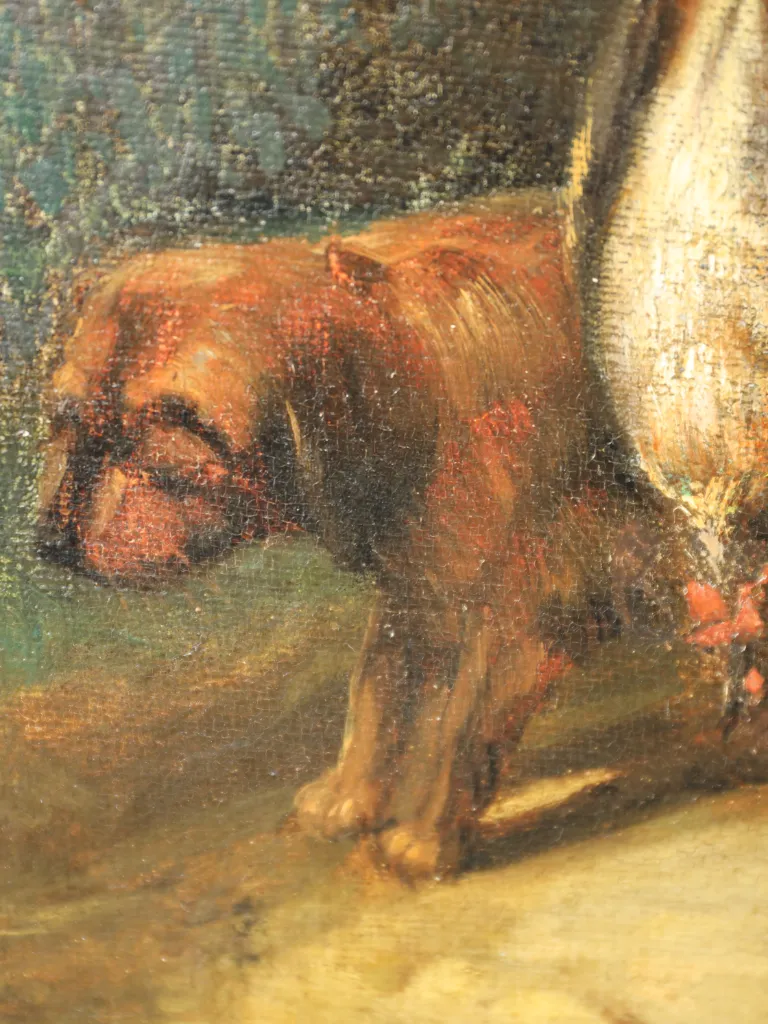
The little dog is particularly appealing.
Warm chestnut and russet tones describe its compact body, while darker passages articulate its muzzle and deeply set eyes. Farasyn has managed to give the animal considerable personality without allowing it to overwhelm the principal figure.
The surrounding landscape has deliberately been kept secondary.
Dense vegetation anchors the left of the composition while a distant horizon opens beyond the figure. Above, the traveller rises dramatically against a broad sky moving from brilliant blue and soft white cloud into darker atmospheric greys.
Edgard Pierre Joseph Farasyn (1858–1938) was an important Belgian painter, watercolourist, draughtsman, engraver and etcher associated particularly with Antwerp.
Born in Antwerp in 1858, Farasyn studied at the Royal Academy of Fine Arts Antwerp, including under the celebrated Belgian painter Nicaise de Keyser. He subsequently returned to the Academy as a teacher in 1885.
His career encompassed landscapes, rural and urban genre scenes, fishermen, harbour subjects, working people and animals.
The Jakob Smitsmuseum holds several works by Farasyn, including Ploegende boer (Ploughing Farmer), Het melkmeisje (The Milkmaid) and the substantial Veemarkt in Mol (Cattle Market in Mol), together with an oil study for the latter. The museum also mounted an exhibition devoted to Farasyn in 2012.
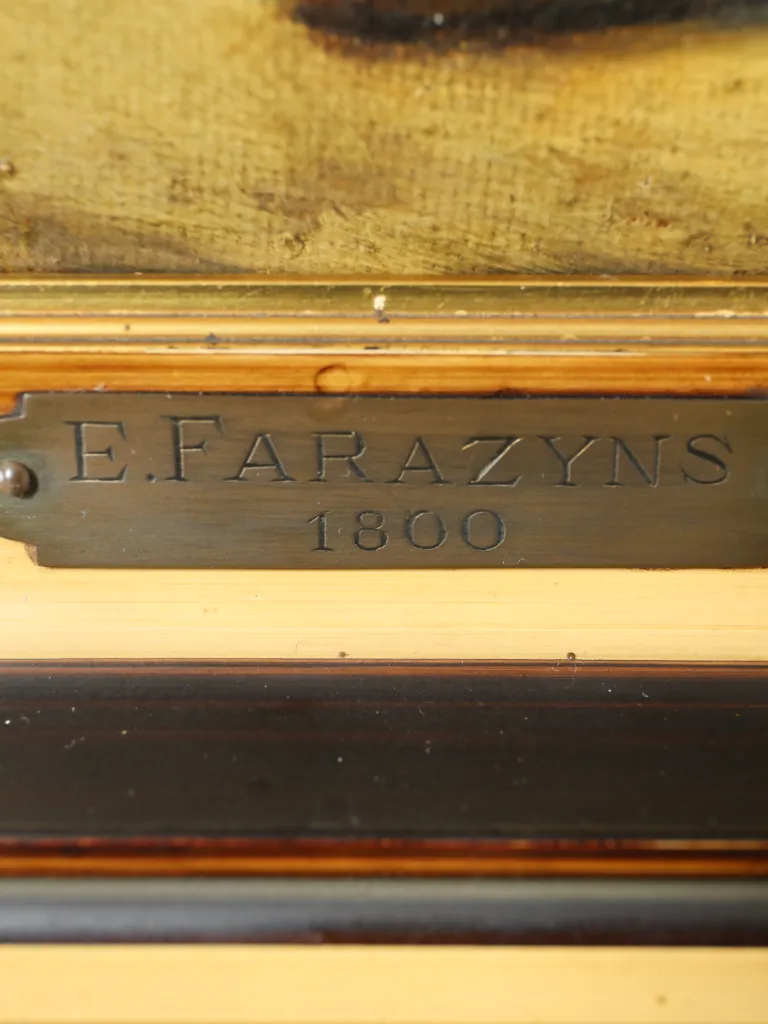
The painting is signed by Edgard Farasyn at the lower left.
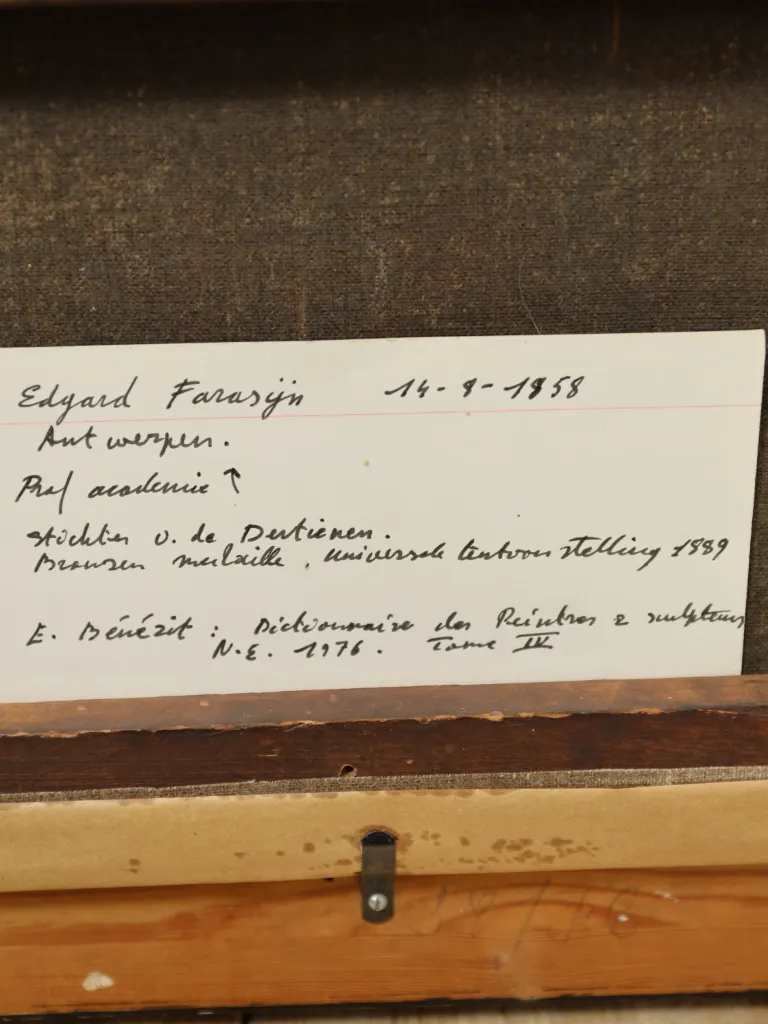
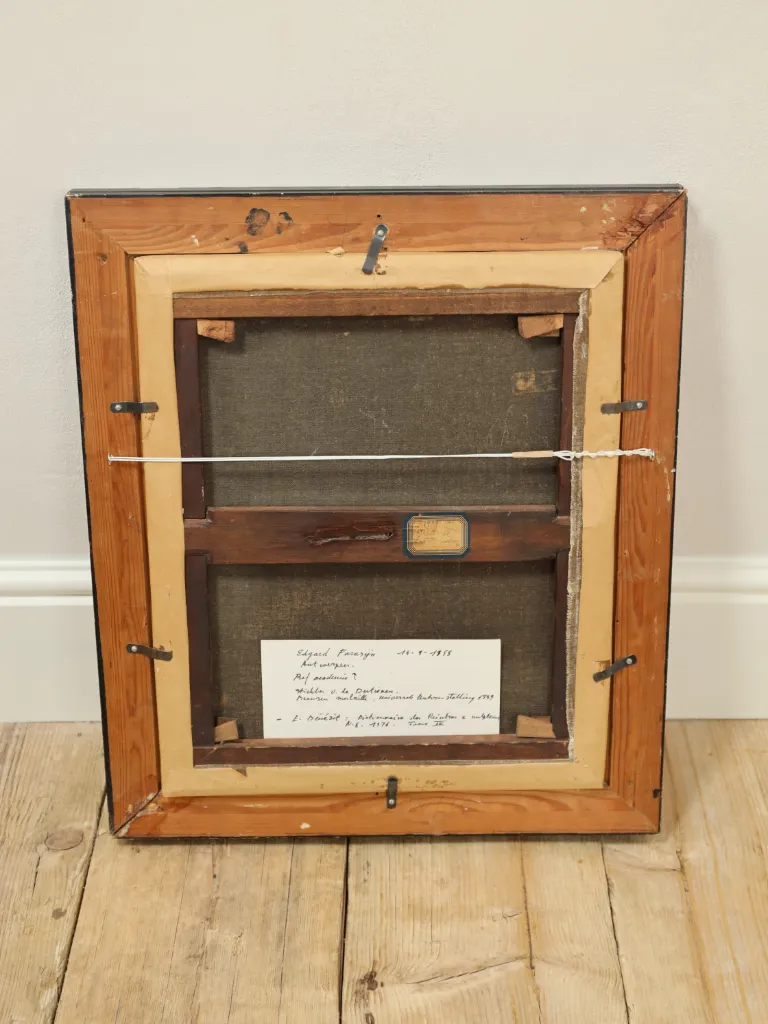
The reverse retains two handwritten references relating to the artist.
The larger card records:
Edgard Farasyn
14-8-1858
Antwerpen
Prof. academie
It additionally contains references to Farasyn's medals, exhibitions and published biographical information.
These details are consistent with independently documented information concerning the artist's Antwerp origins and academic career.
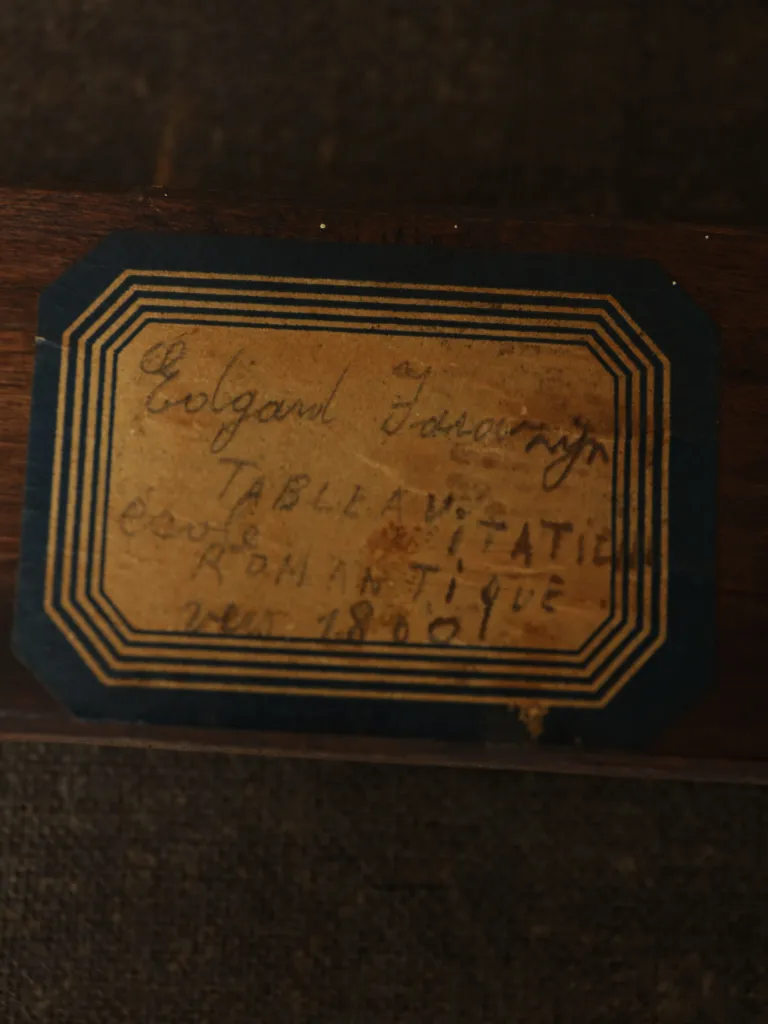
A second, older label attached to the stretcher also carries Farasyn's name together with further handwritten information.
The survival of these annotations alongside the painted signature provides useful historical evidence of the work's longstanding identification as a painting by Farasyn.
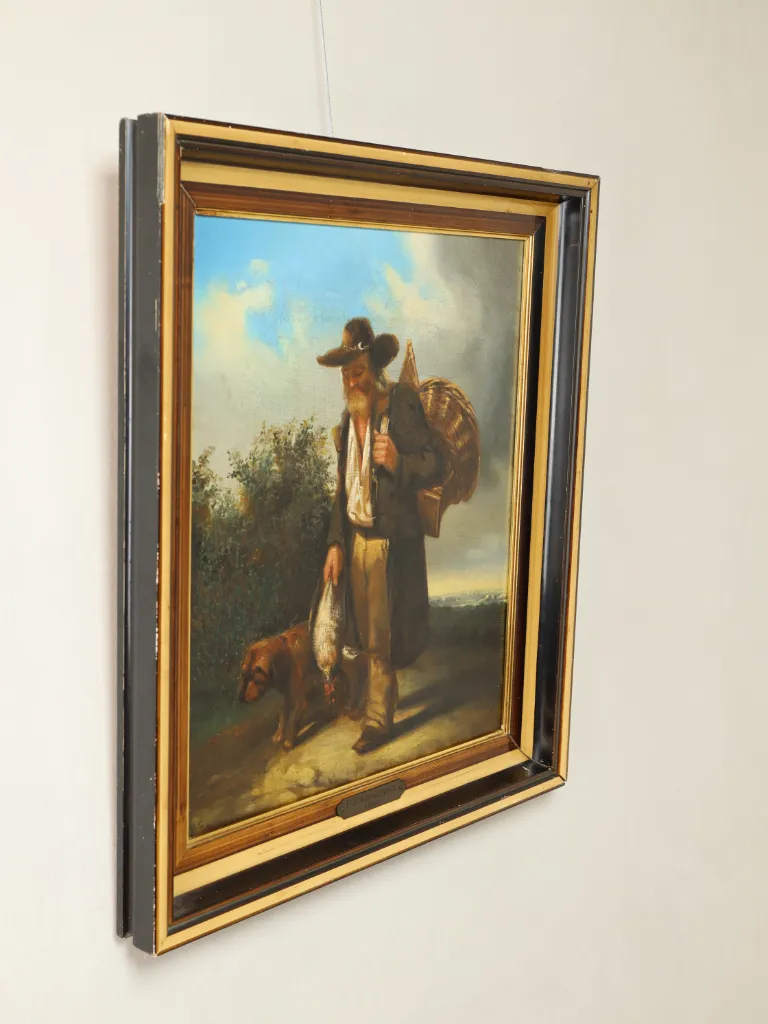
Presented in good antique condition with the wonderfully mature surface expected of a late 19th-century oil painting.
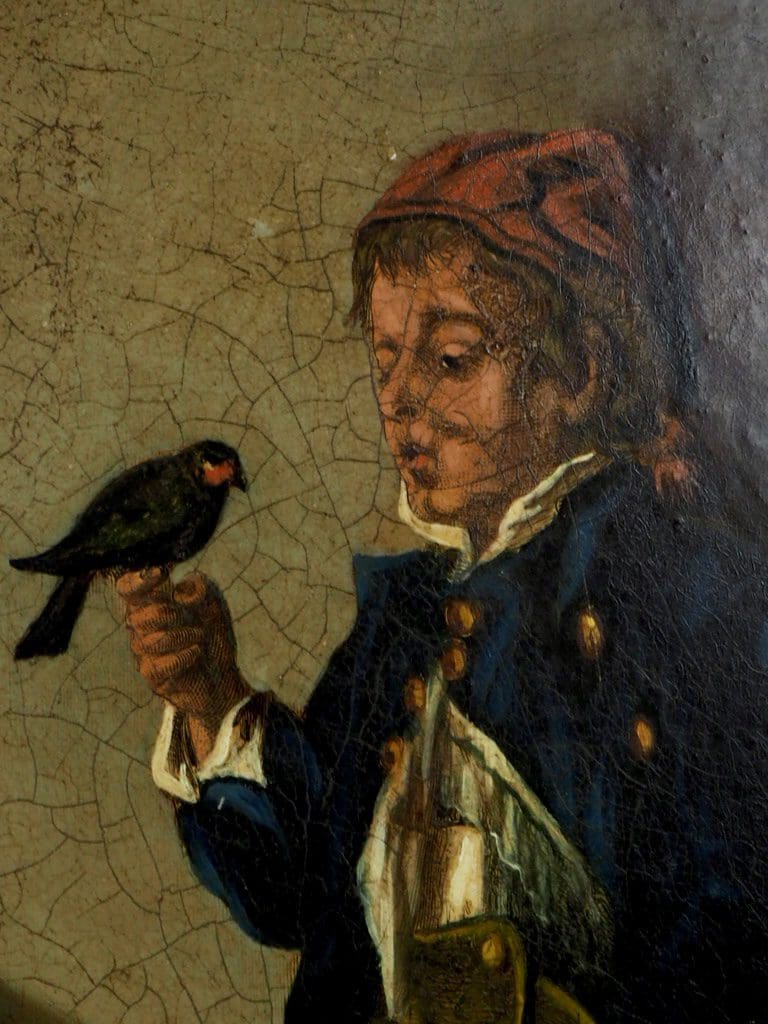
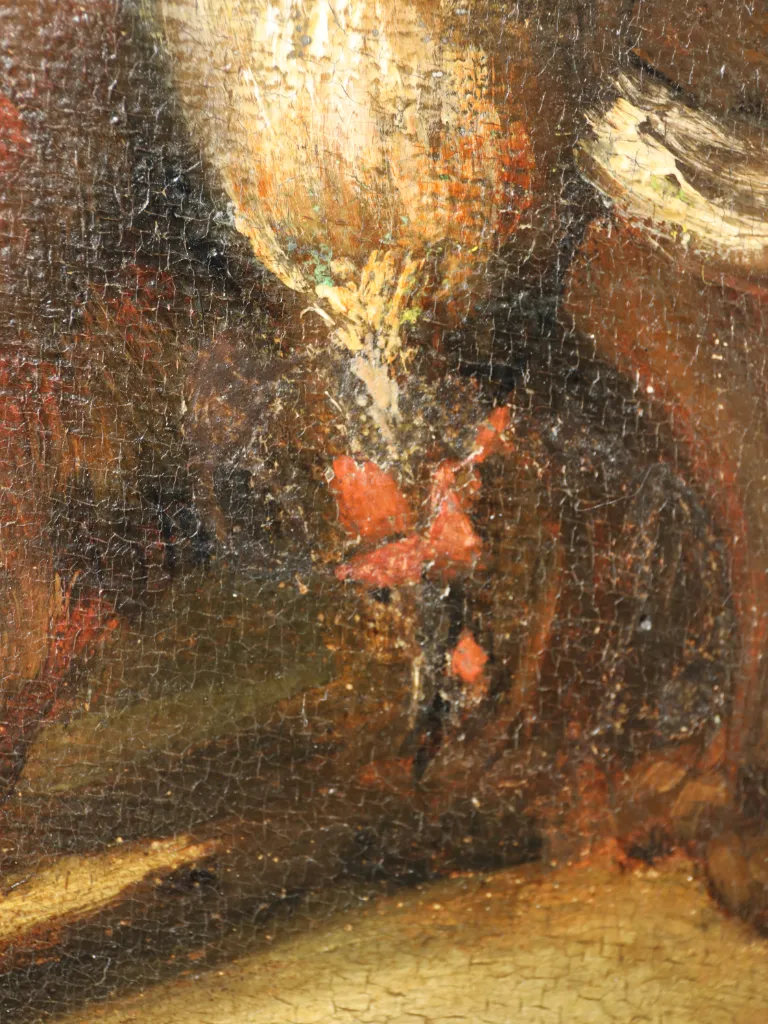
There is an extensive network of fine age-related craquelure throughout the painted surface, particularly visible across the sky, figure and darker passages.
Minor marks, surface wear and imperfections are present commensurate with age.
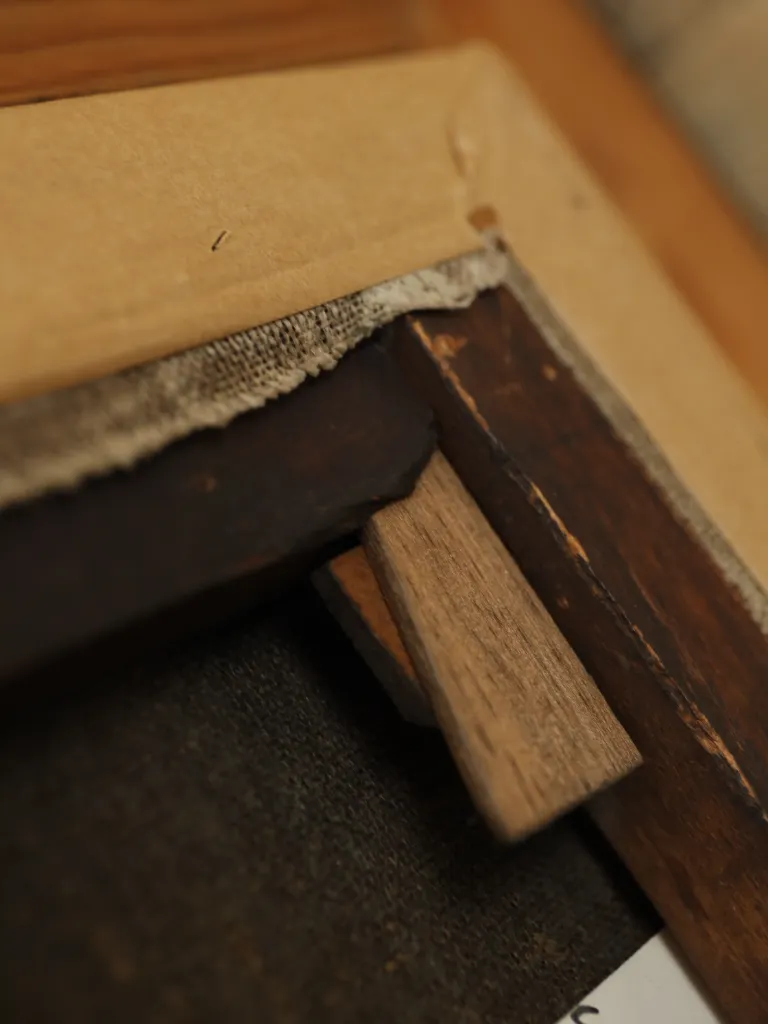
The painting remains mounted upon its older wooden stretcher and retains the two historic handwritten references to Farasyn on the reverse.
The substantial frame displays rubbing, marks and minor wear to the gilt, dark and wood-toned surfaces consistent with age.
The historic painted surface has been retained and forms an important part of the character and appearance of the work.
Height: 54 cm / 21.3 inches
Width: 48 cm / 18.9 inches
Depth: 4 cm / 1.6 inches
Weight: 2.5 kg / 5.5 lbs
Every item offered by Shackleton Fox is carefully inspected, prepared, and where necessary conserved within our workshop prior to sale.
As heritage craftsmen and antique specialists, we believe in preserving the authenticity and integrity of each piece. Original finishes, patina, wear, and signs of age are retained wherever possible, as these elements contribute to both character and historical significance.
When restoration, rewiring, repairs, or conservation work is required, it is undertaken sympathetically using traditional techniques and materials appropriate to the period of the piece. Our philosophy is one of careful stewardship rather than unnecessary restoration, ensuring antiques remain both functional and historically respectful.
The result is a collection of pieces that have been thoughtfully prepared, allowing future owners to enjoy them with confidence while preserving their unique story and character.