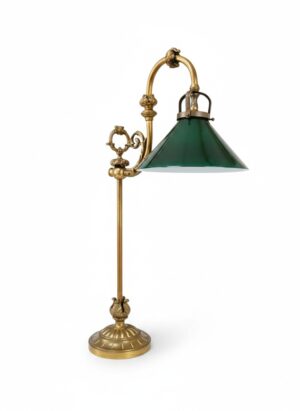
A brass lantern is an enclosed light fitting with a brass frame and glazed panels protecting a candle, oil burner, gas mantle or electric bulb. Brass lanterns may be suspended from a ceiling, fixed to a wall or carried by hand, and they are particularly associated with entrance halls, staircases, porches and passageways.
Hall lanterns became fashionable in English country houses during the eighteenth century, when large glazed lanterns with brass or gilt-brass frames hung in stairwells and entrance halls to protect candles from draughts. The nineteenth century produced a great variety of brass lanterns, including hexagonal and octagonal hall lanterns, bell jar lanterns, ship's lanterns and carriage lamps, many adapted later for electricity. Edwardian and early twentieth-century lanterns in Georgian and Gothic styles are widely available and remain popular. Collectors look for heavy, well-finished castings, good proportions, original glass, which may be bevelled, etched or coloured, and an attractive mellow patina rather than harsh modern lacquer. Smoke canopies and finials should be complete, and any electrical conversion should be carried out neatly and safely. A good brass lantern gives an entrance hall or landing a distinctly period atmosphere.