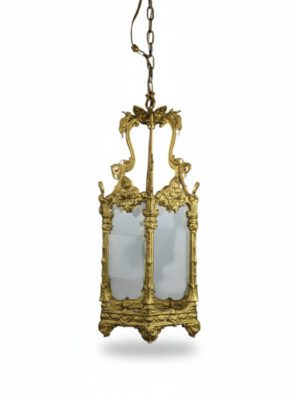
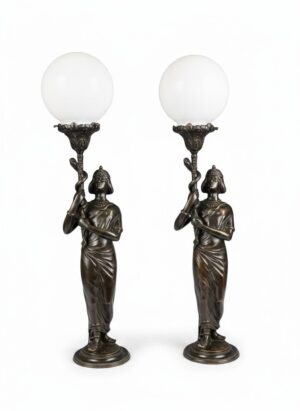
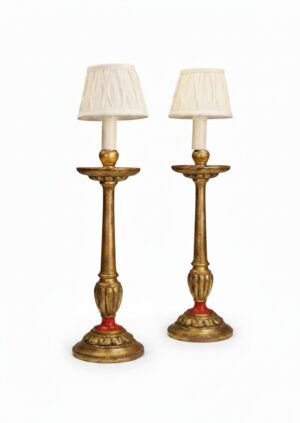
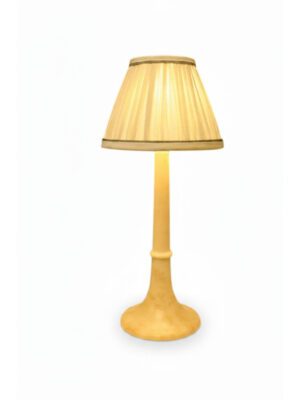
A ceiling lantern is an enclosed, glazed light fitting suspended from a ceiling by a chain, rod or set of chains, with a frame of metal or wood protecting the light source within. Ceiling lanterns are traditionally hung in entrance halls, stairwells, landings, corridors, porches and lobbies.
In eighteenth-century English houses, large hall lanterns hung from the ceilings of entrance halls and staircases, their glazing shielding candles from the draughts of opening doors. They were made in brass, gilt brass, bronze and carved giltwood, in square, hexagonal and octagonal forms, and some had smoke shades to protect the ceiling. The nineteenth and early twentieth centuries produced many more, including bell jar lanterns with a single glass globe, Gothic lanterns for churches and halls, and simpler copper and iron lanterns for porches and service areas. Most surviving examples have been converted to electricity. When choosing a ceiling lantern, size and proportion are critical, as the fitting must suit the height of the space and the length of the drop. Buyers should also examine the glass, frame joints and finish, as well as the condition of the chain and ceiling canopy. A well-chosen lantern gives an entrance immediate presence.