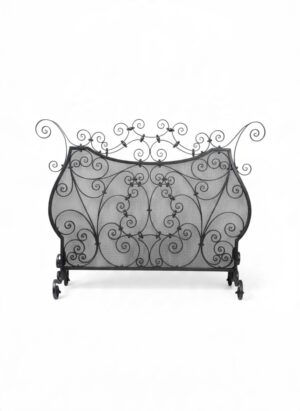
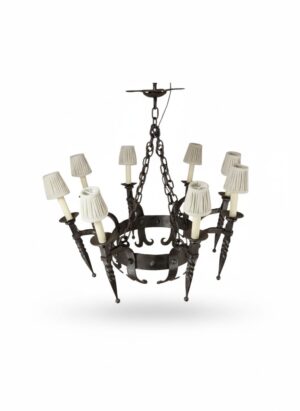
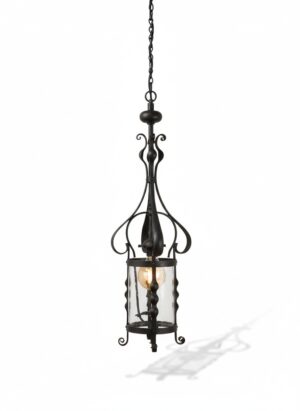
Ironwork is decorative and functional work made in iron, either wrought by a blacksmith or cast in a foundry. It includes gates, railings, balconies, balustrades, grilles, weathervanes, fire grates, firebacks, garden furniture, lamp brackets and structural architectural elements.
Wrought ironwork is shaped by heating and hammering, allowing scrolls, leaves and twisted bars to be formed by hand. English wrought ironwork reached a high point in the late seventeenth and early eighteenth centuries, when the French smith Jean Tijou created magnificent screens and gates at Hampton Court, and later English smiths produced fine gates for country houses and churches. Cast iron, poured into moulds, became the dominant material in the nineteenth century, when foundries such as Coalbrookdale and the Carron Company in Scotland produced railings, benches, fountains, urns and fireplaces in vast quantities. Collectors and restorers distinguish between wrought and cast iron by examining joints, surface texture and detail. Rust is the main problem, and old paint layers should be assessed before cleaning. Good antique ironwork is highly valued for garden and architectural projects, adding structure and period character.