Queen Anne describes the style of English furniture and decorative arts associated with the reign of Queen Anne, from 1702 to 1714, although the term is often used more loosely for work from about 1700 to the 1720s. The style is characterised by graceful curves, restrained ornament and the extensive use of walnut veneers.
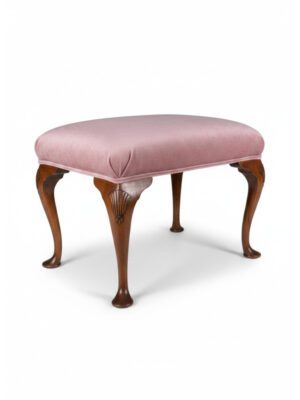
Queen Anne furniture moved away from the heavy, turned and carved forms of the late seventeenth century towards lighter, more elegant designs. The cabriole leg, often ending in a pad or club foot, became fashionable, together with vase-shaped chair splats, shaped aprons and bureau bookcases with arched mirror doors. Walnut was the dominant timber, with figured veneers, crossbanding and featherbanding, and japanned furniture imitating oriental lacquer was also popular. Silver of the period is admired for its simple forms and the higher Britannia standard. In the later nineteenth century the term Queen Anne was also adopted for a revival style in architecture associated with Norman Shaw, which drew on red-brick buildings of the late seventeenth and early eighteenth centuries. Genuine Queen Anne furniture is scarce and valued for its colour, patina and originality, and many later reproductions exist.