Velvet is a woven fabric with a short, dense, evenly cut pile that gives it a soft surface and a rich, light-catching depth of colour. It is made by weaving an extra set of warp threads over rods or wires, which are then cut to produce the pile, and it can be woven from silk, cotton, linen, wool or, later, synthetic fibres.
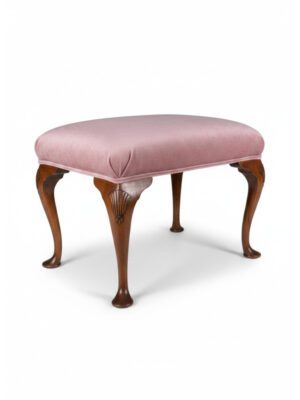
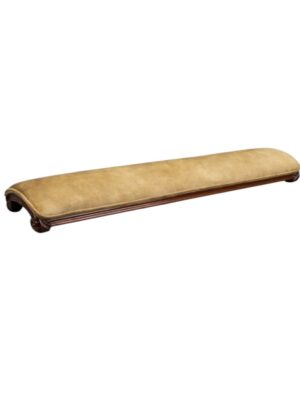
Silk velvet was among the most luxurious and expensive of European textiles, with Italian weaving centres such as Genoa, Venice and Florence producing celebrated figured and cut velvets from the fifteenth century onwards. Velvet was used for court dress, church vestments, wall hangings, bed curtains and the upholstery of state chairs and stools. Cotton velvet and the hard-wearing Utrecht velvet, a mohair and cotton plush, became widely used in the eighteenth and nineteenth centuries. Antique velvets are prized for their colour, pile quality and pattern, and fragments of early figured velvet are collected as textiles in their own right. Condition is critical, as pile wears and crushes easily, and silk is vulnerable to light and splitting. Velvet remains a favourite upholstery choice for antique chairs and sofas, adding warmth and depth to period rooms.