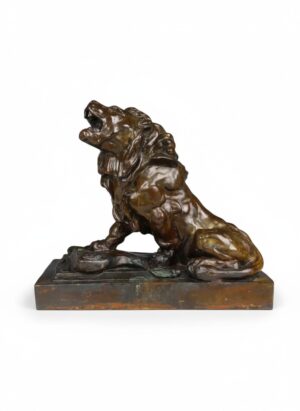
Animal sculpture is sculpture in which animals are the principal subject, whether depicted alone, in groups, in combat or alongside human figures. It has been made in every material, including bronze, marble, stone, wood, terracotta, lead, porcelain and spelter, and ranges from small table figures to monumental garden and architectural pieces.
Animals have been carved and cast since antiquity, but the most significant movement for collectors is the nineteenth-century French school known as the Animaliers, led by Antoine-Louis Barye and including Pierre-Jules Mêne, Christophe Fratin, Isidore Bonheur and Jules Moigniez. Their naturalistic bronzes of horses, hounds, big cats and game were produced in editions for a growing middle-class market. Austrian cold-painted bronzes, English lead garden animals and Staffordshire pottery figures form related fields. When assessing animal sculpture, collectors consider the quality of casting and chasing, the colour and condition of the patina, foundry marks and signatures, and whether a cast is lifetime or later. Many popular models were re-cast in later periods, sometimes in inferior quality. Animal subjects suit country-house interiors particularly well, appearing on library tables, mantelpieces and terraces, where hunting dogs, stags and horses echo sporting traditions.