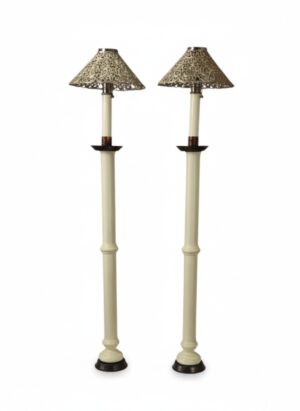
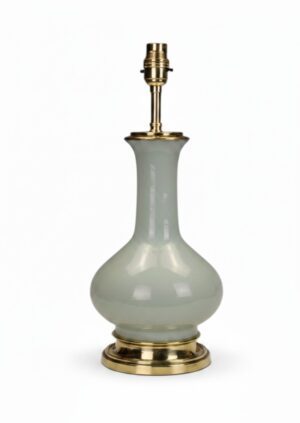
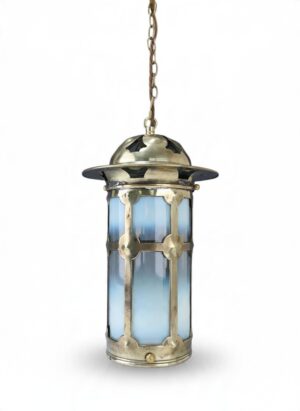
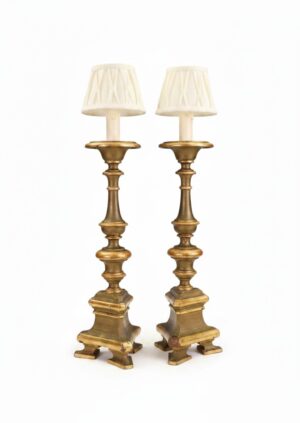
A duplex burner is a type of oil lamp burner that holds two flat wicks side by side, producing a brighter and steadier flame than a single-wick burner of similar size. It was one of the most widely used burners for paraffin lamps in Britain from the later Victorian period into the twentieth century.
The design is associated with the Birmingham firm of Joseph Hinks and Son, whose duplex burners became a standard fitting, and it was soon produced by many other makers in Britain and abroad. Two parallel wicks are raised and lowered by toothed wheels operated by external knobs, and the flames merge into a single broad flame beneath a perforated gallery that supports the glass chimney and, often, a globe or shade. Duplex burners were fitted to table lamps, library lamps, hanging lamps and banquet lamps, typically screwed into a collar on the lamp's reservoir. Collectors and restorers check that a burner is complete, with its gallery, wick winders, flame spreader and correct chimney size, and that the maker's name stamped on the winders is legible. Many duplex lamps have since been converted to electricity, and an original, working burner adds to the authenticity of a lamp.