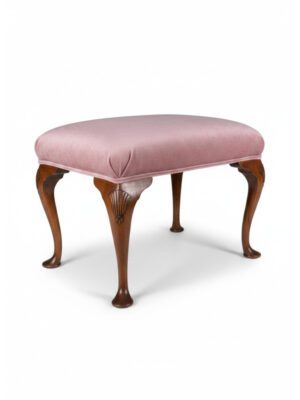
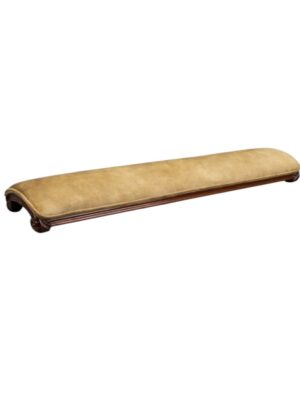
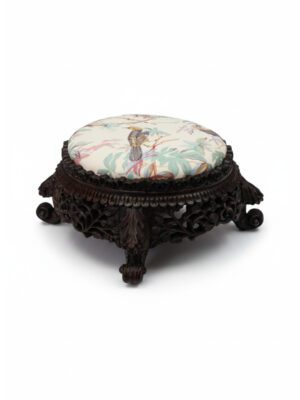
A stool is a seat without a back or arms, made for one person. It is one of the oldest forms of furniture, and antique examples range from simple three-legged milking stools and kitchen stools to joined oak stools, upholstered footstools, dressing stools, piano and duet stools and grand window seats.
In the medieval and Tudor period, stools were the most common form of seating, with chairs reserved for the head of the household. The joined or joint stool, made by a joiner with mortise-and-tenon construction and turned legs, became standard in the sixteenth and seventeenth centuries, and many reproductions were made later. Georgian and Regency stools were often upholstered with needlework or damask, with carved cabriole, X-frame or sabre legs, and Victorian makers produced adjustable piano stools, footstools in Berlin wool work and stools with music storage. Country makers turned stools in elm, ash and beech for kitchens, dairies and workshops. Collectors look for original surfaces and construction, good wear consistent with age and authentic upholstery where present. Stools are endlessly useful, serving as extra seating, side tables, footrests or a place for books beside a chair.