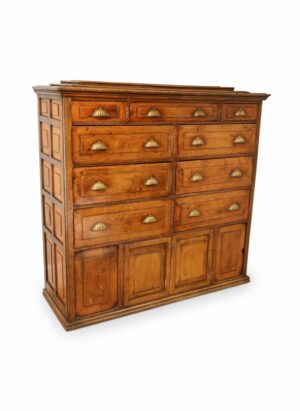
Yew is a dense, close-grained softwood obtained from the slow-growing evergreen tree Taxus baccata, long associated with English churchyards, longbows and topiary. Despite being botanically a softwood, it is hard, heavy and durable, with a warm orange to reddish-brown colour, attractive figure and frequent small knots and burrs.
Yew has been used in English furniture since the medieval period, though its limited supply in large sizes meant it was generally used selectively. It is particularly prized for Windsor chairs, where yew was used for bows, arms and spindles in the finest examples, as well as for turned work, small tables, boxes and treen. Yew veneers, especially burr yew, were used in the late seventeenth and eighteenth centuries on high-quality case furniture such as chests of drawers, bureaux and clock cases, often combined with walnut or crossbanding. The timber develops a rich, glowing patina with age. Collectors value yew furniture for its colour, figure and comparative rarity, and yew Windsor chairs in original condition are among the most desirable country chairs. Its natural splits and knots, while characterful, should be checked for stability.