£3,450.00
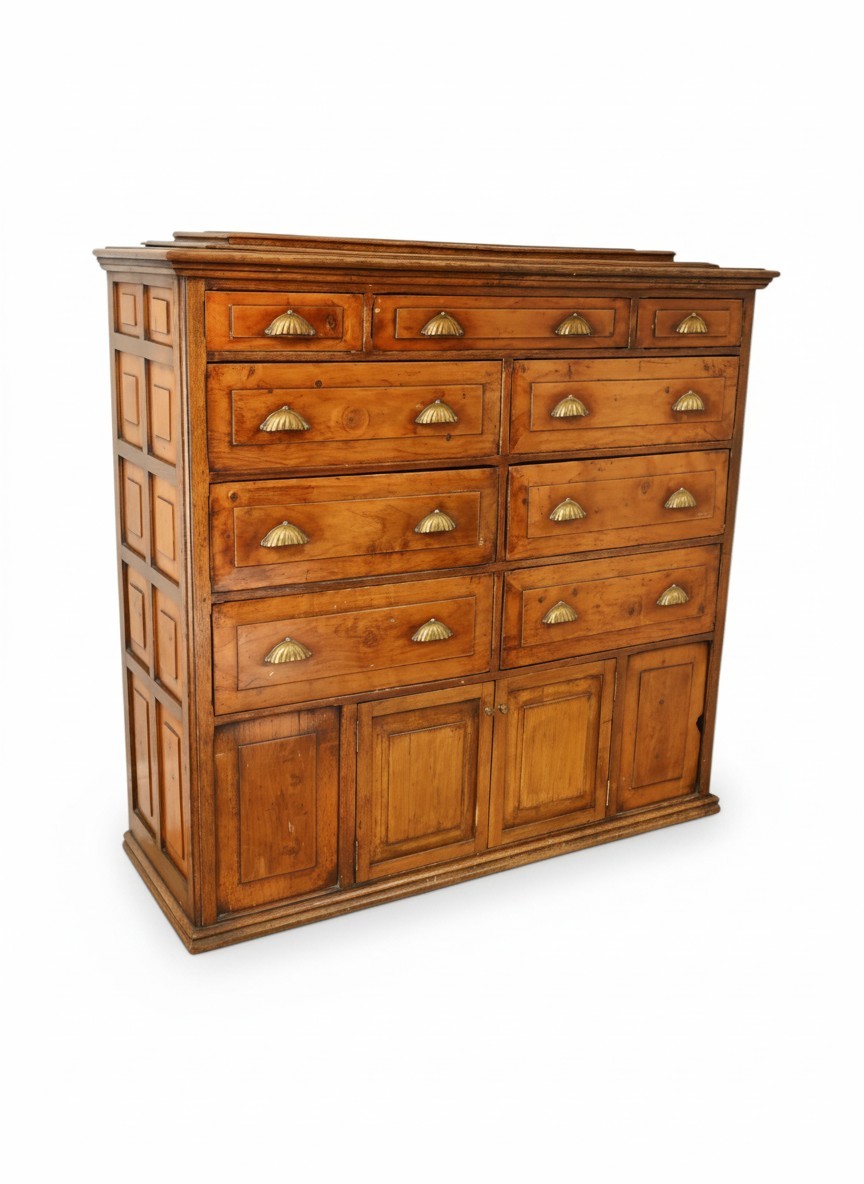
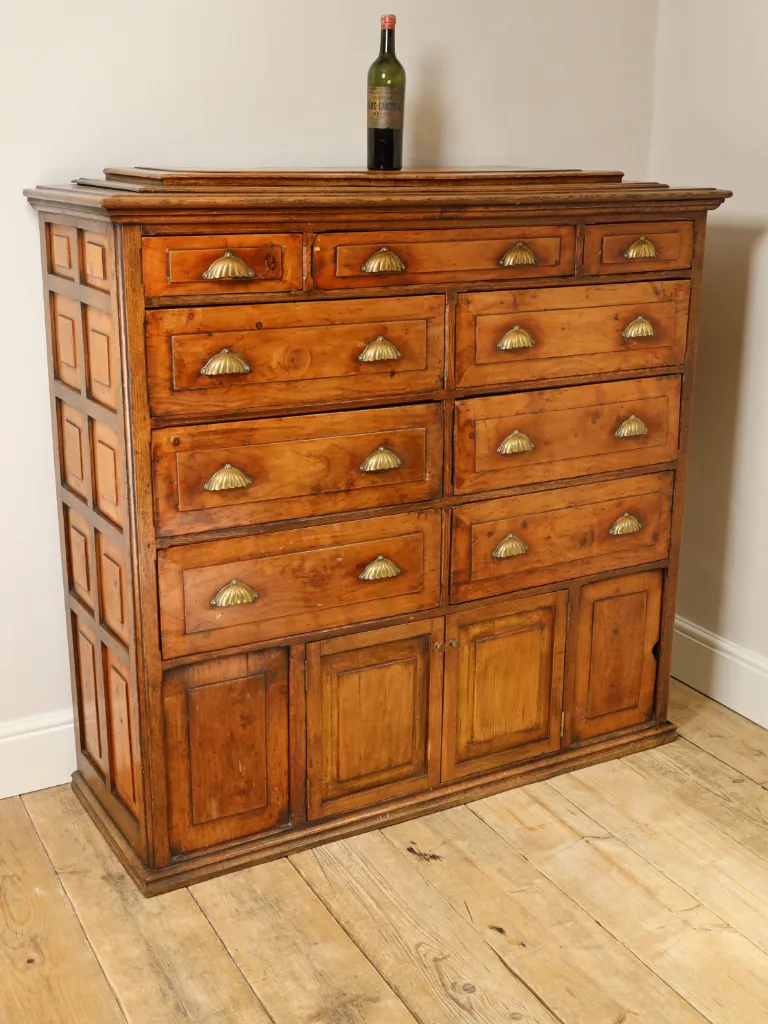
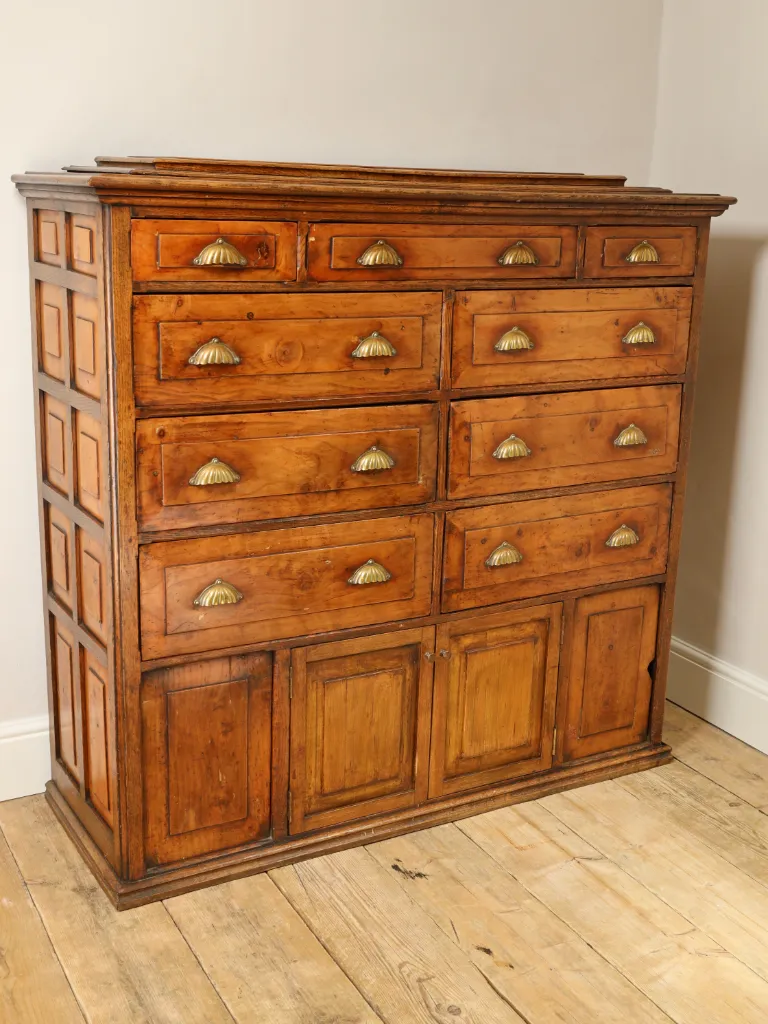
An exceptional and unusually large 19th-century bank of drawers, beautifully constructed in oak and pine and retaining its original brass shell handles. Combining extensive practical storage with architectural detailing and an intriguing arrangement of concealed drawers, this is a remarkable piece of period working furniture.



An exceptional and unusually large 19th-century bank of drawers, beautifully constructed in oak and pine and retaining its original brass shell handles. Combining extensive practical storage with architectural detailing and an intriguing arrangement of concealed drawers, this is a remarkable piece of period working furniture.
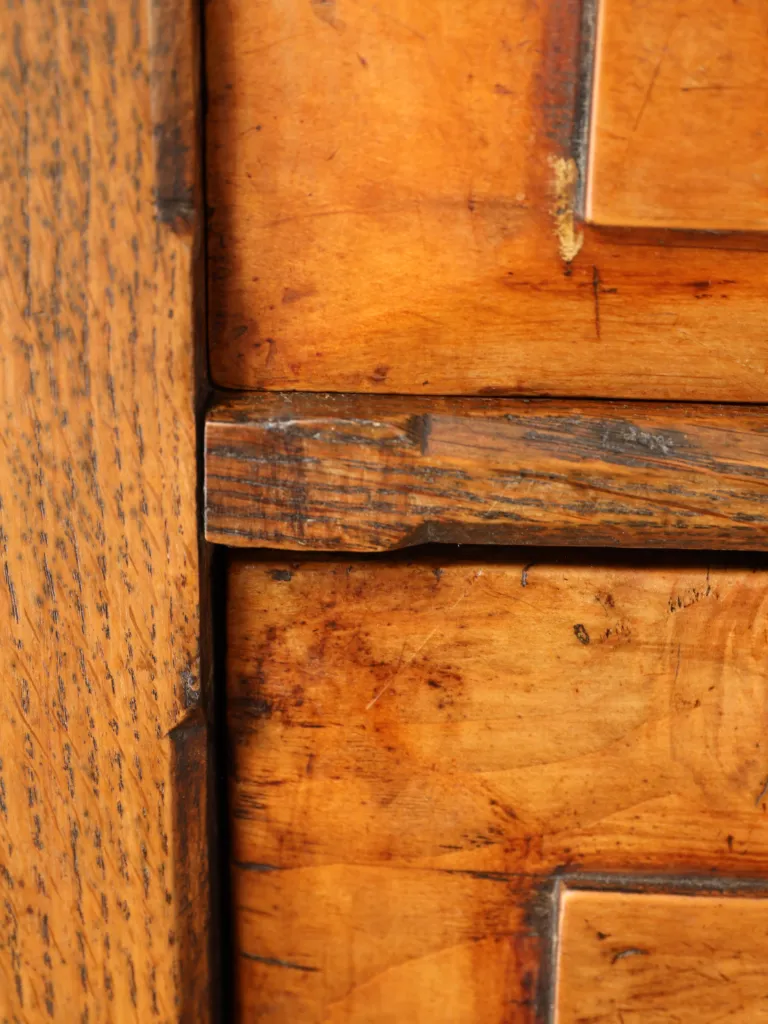
The cabinet is built around a substantial oak framework, with pine used for the drawer fronts and secondary elements. The contrasting timbers have developed a wonderfully rich, warm surface through generations of use, with variations in colour, historic marks and wear giving the piece enormous character.
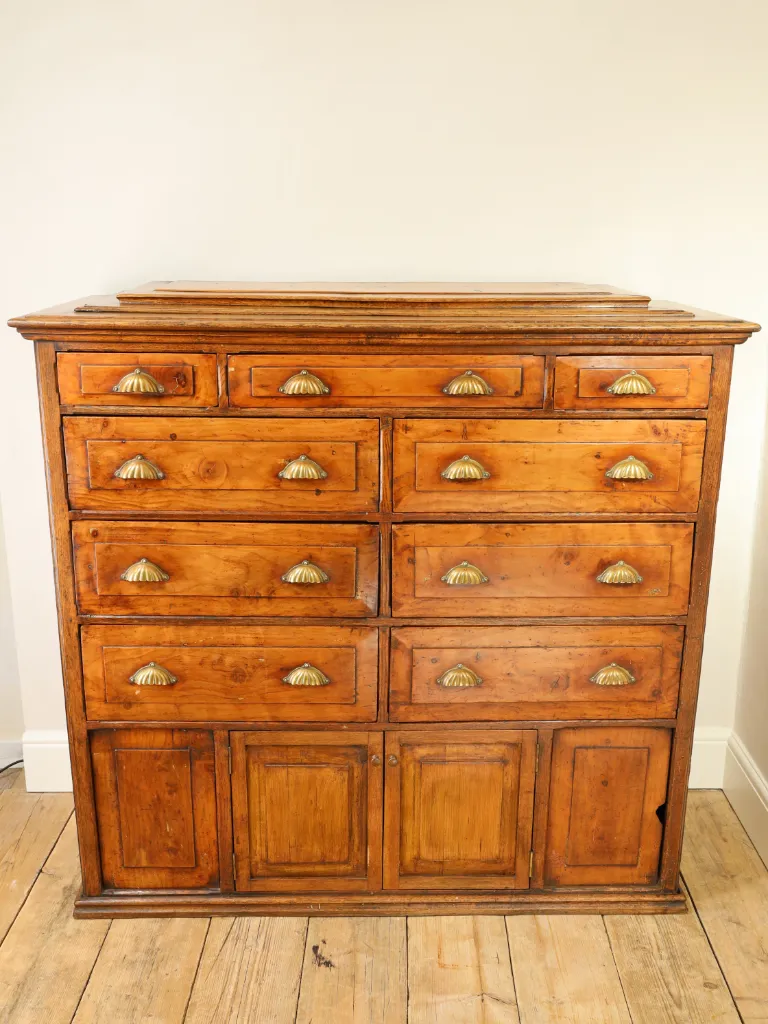
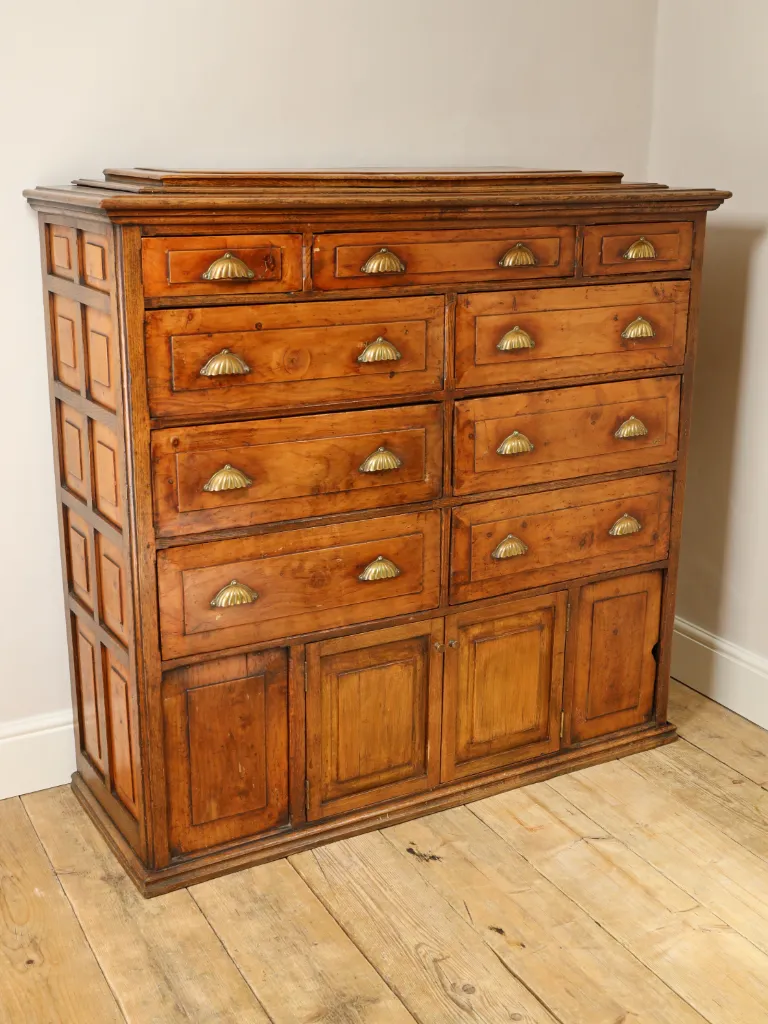
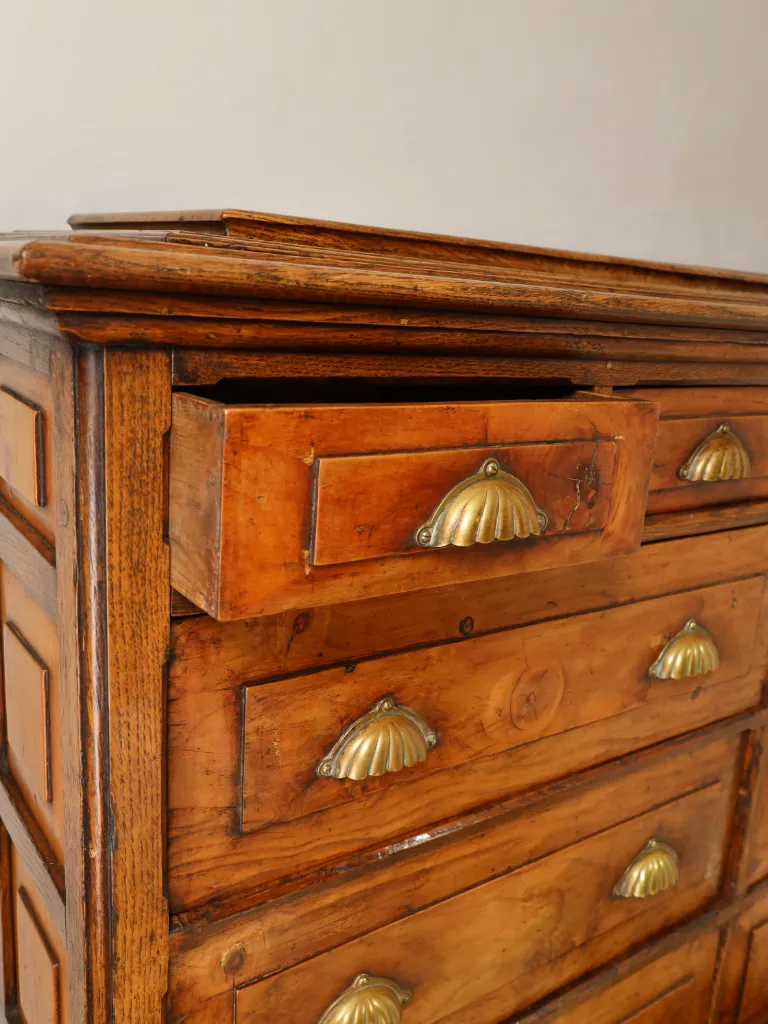
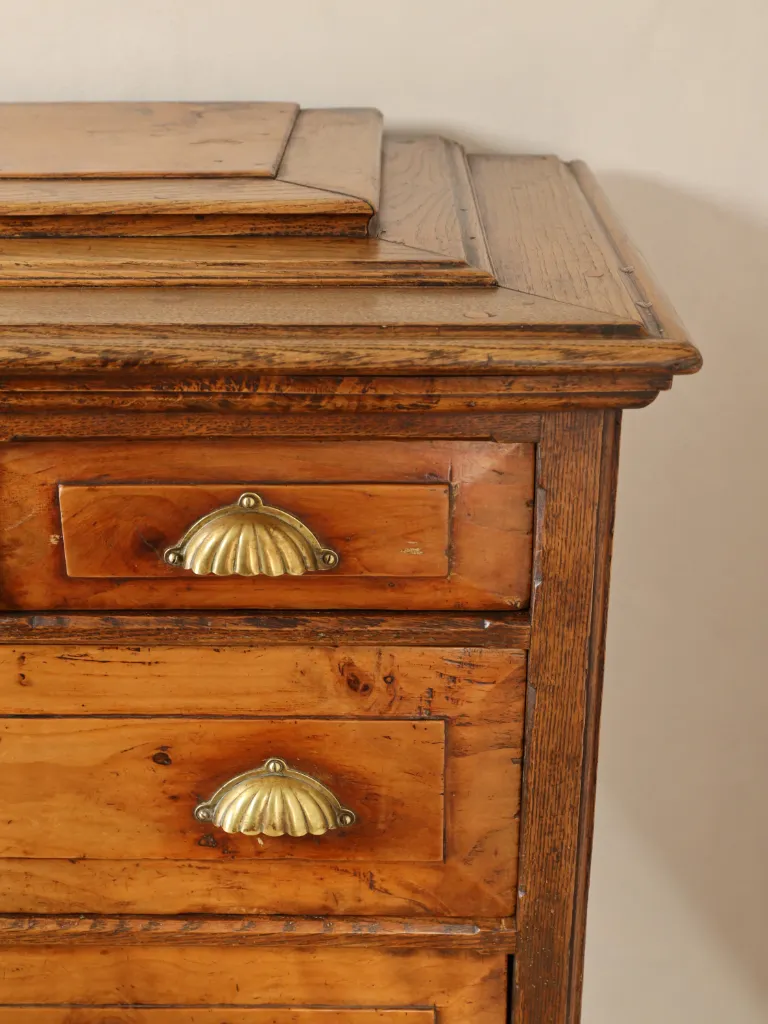
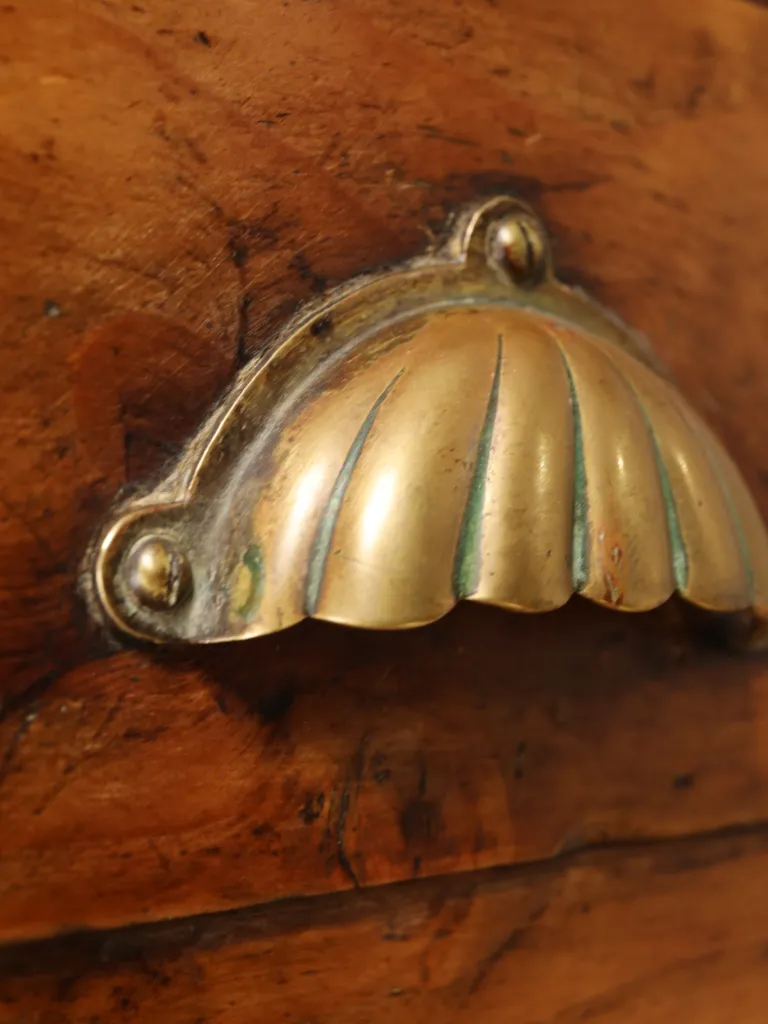
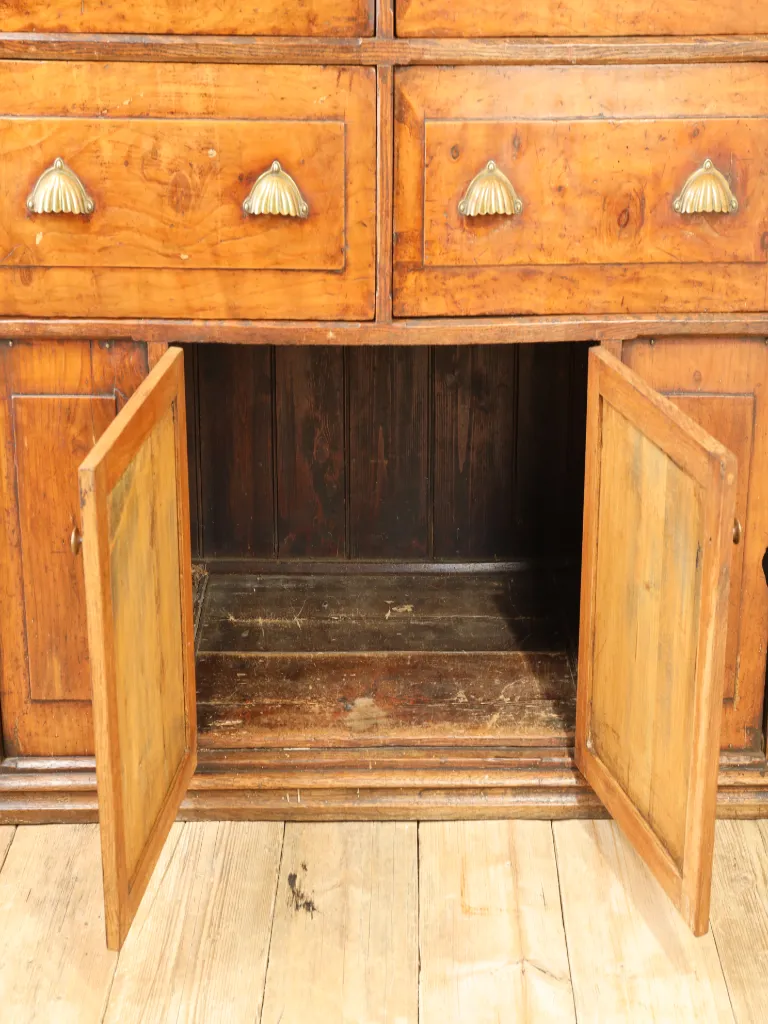
Across the upper section are nine drawers: three smaller drawers arranged across the top, followed by six substantial drawers positioned in three pairs below. The drawers retain their original brass shell handles, which have acquired an attractive naturally aged patina.
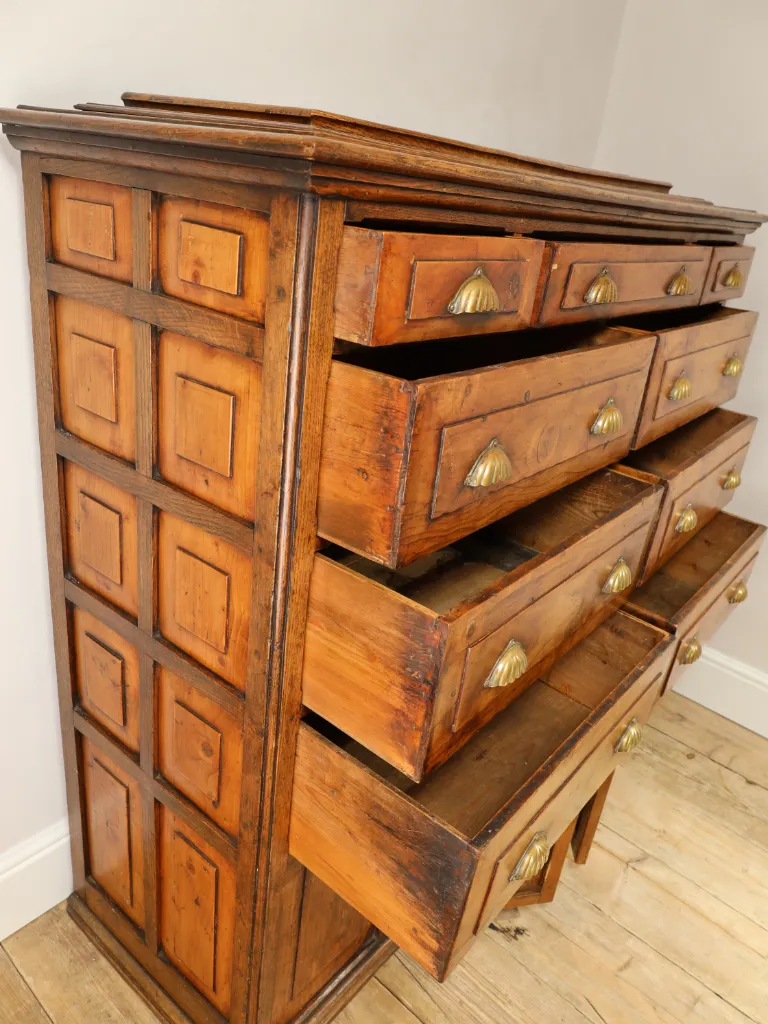
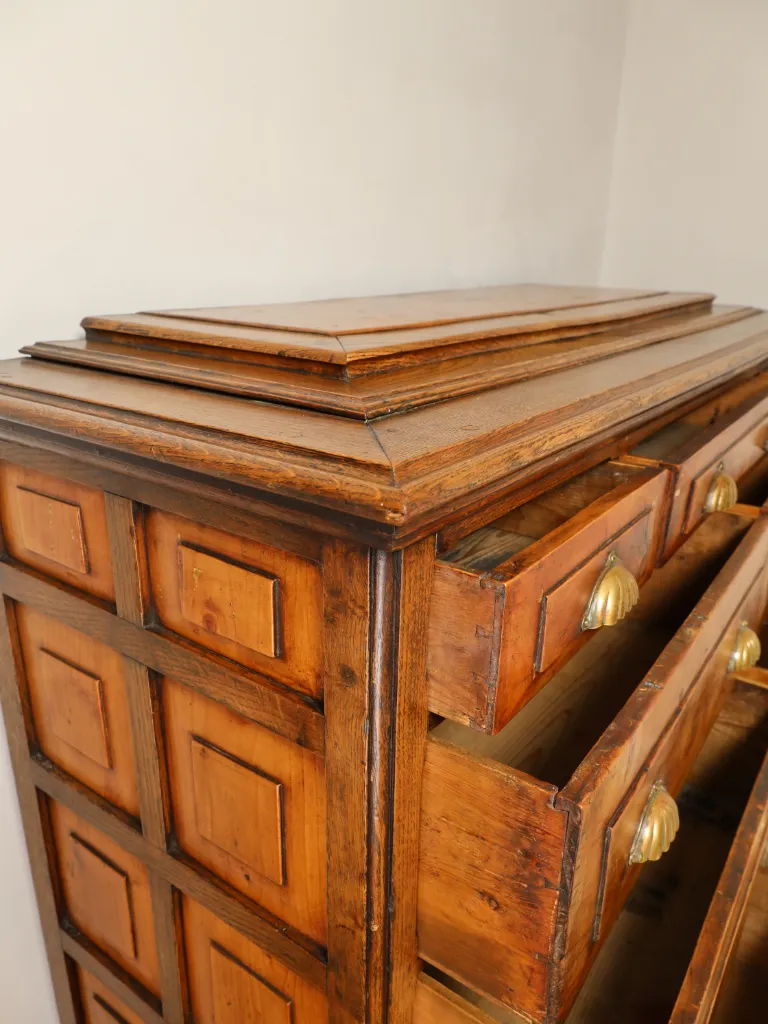
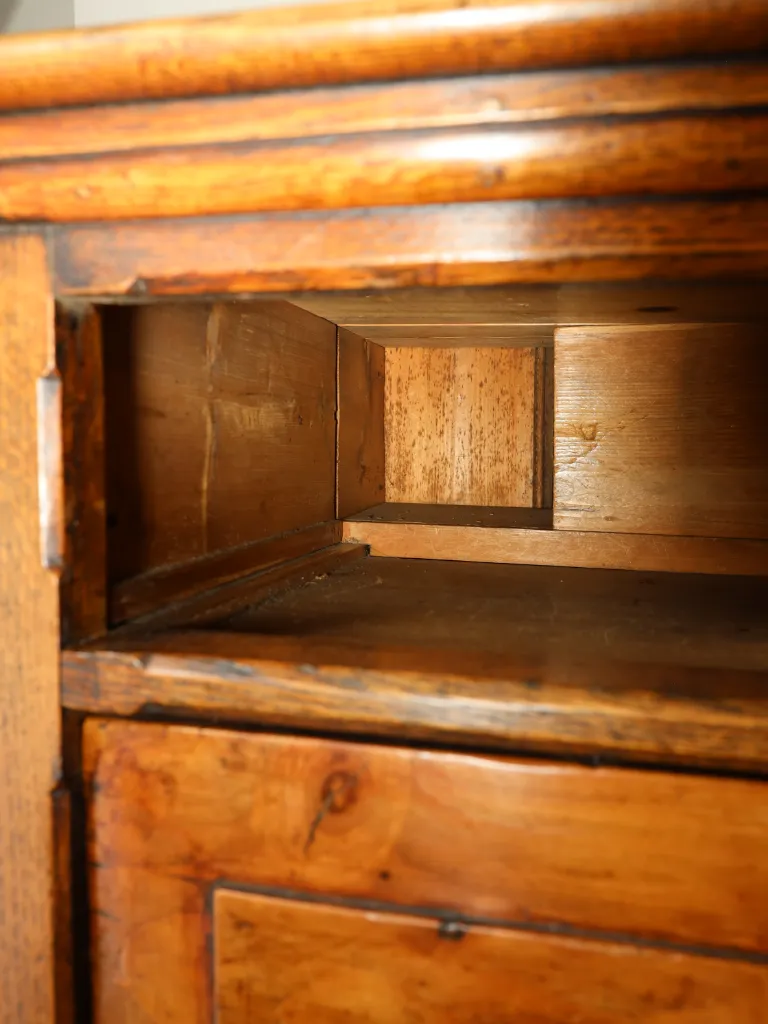
Behind the upper drawers is one of the cabinet's most interesting features: concealed secret drawers, hidden within the internal construction and only revealed when the corresponding front drawers are removed. These discreet compartments may originally have been intended for the storage of money, documents or other valuables.
The lower section provides further storage behind four panelled cupboard doors, creating an exceptionally useful combination of drawer and cupboard space.
Despite its considerable storage capacity, the cabinet is only 50 cm / 19.7 inches deep, making it surprisingly practical for a piece of this scale.
This is considerably more than a utilitarian bank of drawers.
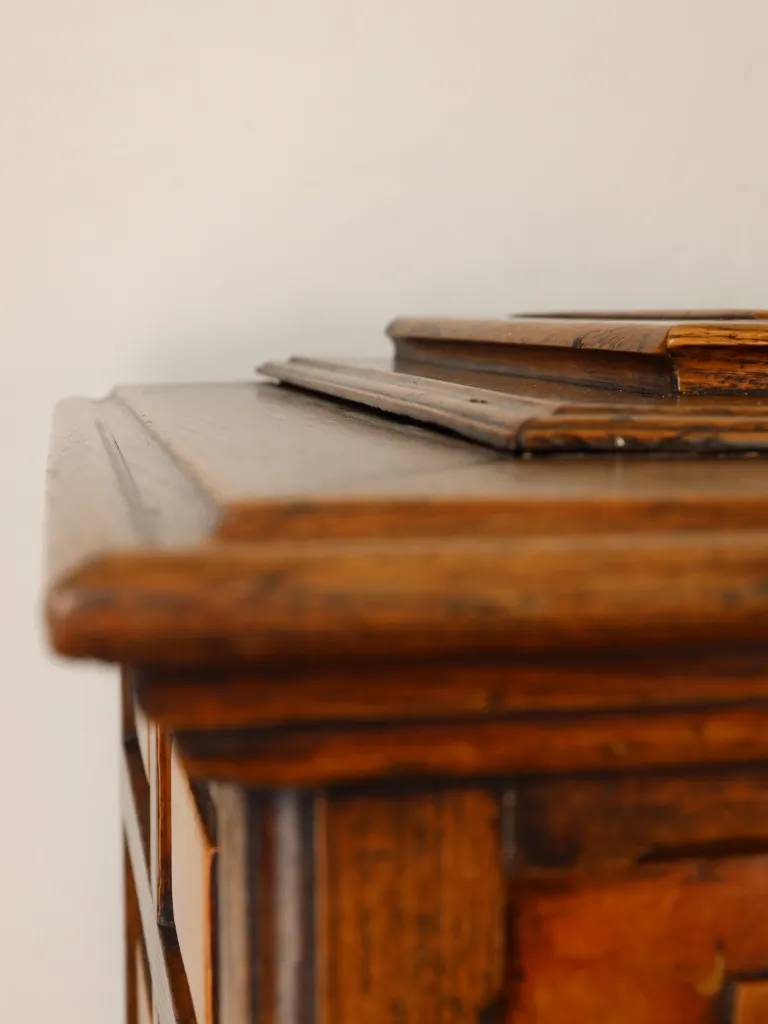
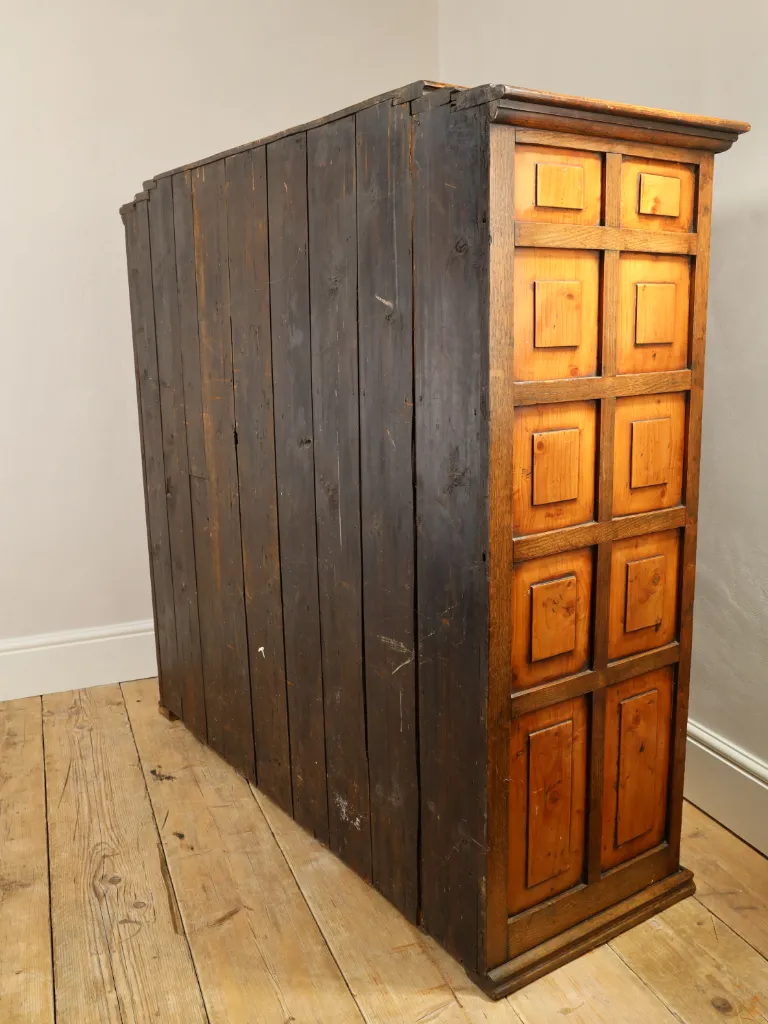
The cabinet is crowned by a handsome raised stepped plinth, formed from several layers of moulded timber. This architectural treatment gives the piece a strong silhouette and considerable presence.
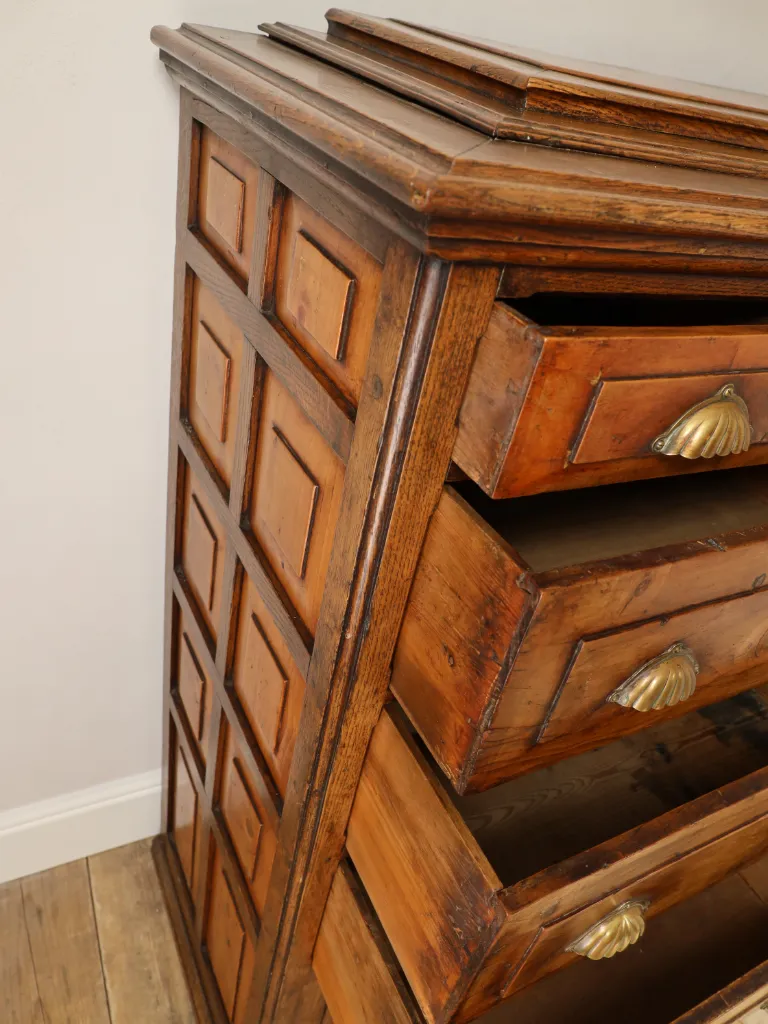
Particularly attractive are the sides, which have been carefully divided into a series of raised rectangular panels framed by the darker oak structure. It is an unusually decorative treatment for a piece of working furniture and means the cabinet remains visually interesting when viewed from either side.
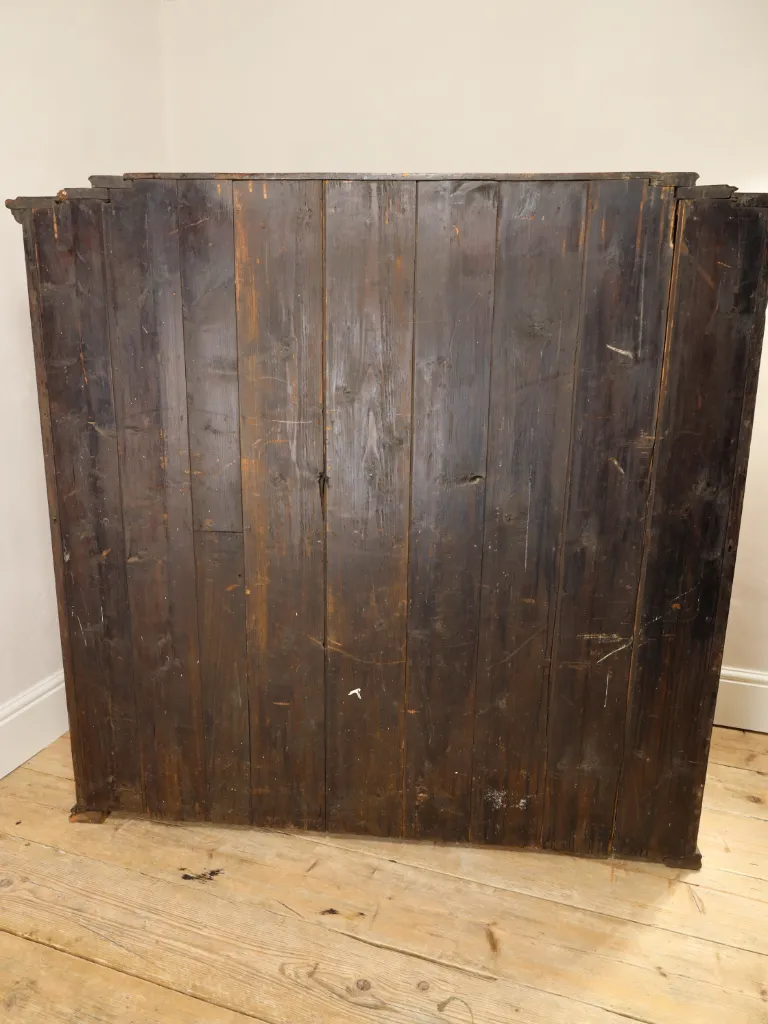
A substantial moulded base completes the composition, while the rear retains its traditional vertically boarded construction.
The result is a piece with the visual strength of architectural furniture while retaining the honesty and character of something originally made to work.
An especially unusual feature is the inclusion of concealed drawers behind the upper front drawers.
Invisible during normal use, these small compartments are incorporated into the internal structure of the cabinet and become accessible once the corresponding drawer has been removed.
Secret compartments were traditionally incorporated into furniture to provide discreet storage for money, private correspondence, documents and other valuable items.
Their survival adds another fascinating layer to the history and craftsmanship of this cabinet.
The cabinet's precise original commission is unknown.
Its substantial construction, numerous drawers, concealed storage and extensive working capacity strongly suggest that it was made as specialist commercial, office or institutional furniture rather than as a conventional domestic chest of drawers.
It could conceivably have been used within a merchant's premises, pharmacy, office, shop or similar working environment.
Without documentary provenance, however, we prefer not to attribute it definitively to a particular trade.
Today, its proportions make it exceptionally versatile. It could work beautifully as storage within a large kitchen, pantry, boot room, library, study, studio, retail interior or country-house setting.
The cabinet has undergone sympathetic conservation and restoration, with the intention of preserving its historic character while ensuring it remains practical for continued use.
Restoration work was undertaken in part by Alex Webster of Conwy Bay.
Two missing doors within the lower cupboard section have been carefully replaced. The new doors were made to correspond with the surviving originals and sit naturally within the historic cabinet.
The piece has also been treated and carefully polished, enhancing the depth and warmth of the oak and pine while retaining the marks, variations and patination associated with its long working life.
It has deliberately not been over-restored. Its historic surface remains an important part of its character.
Origin: United Kingdom
Period: 19th Century
Date: Circa 1850–1880
Materials: Oak, pine, brass and iron
Hardware: Original brass shell drawer handles
The principal framework is constructed in oak, providing strength and definition to the cabinet, while pine has been used extensively for the drawers, panels and secondary construction.
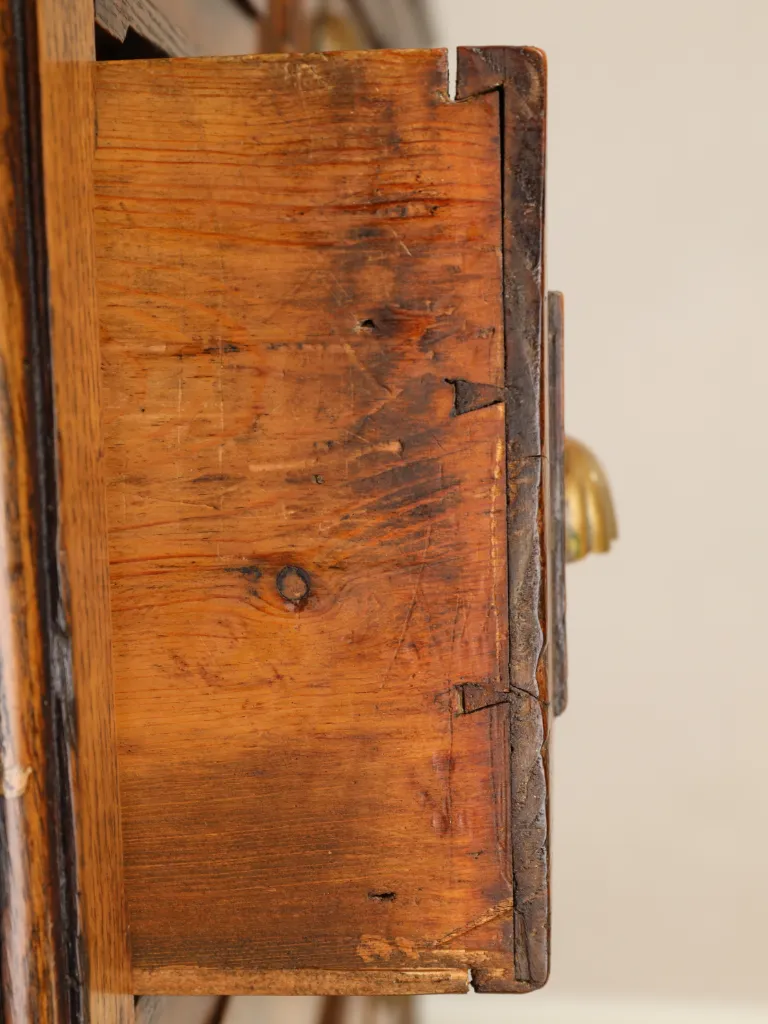
Traditional boarded construction is visible to the rear, while the substantial drawer boxes and internal framework demonstrate that this was originally made as a serious piece of working furniture.
The cabinet is presented in good antique condition, with wear and surface variation consistent with its considerable age and original working purpose.
Throughout the timber are historic marks, knocks, scratches, old holes, colour variations and areas of wear. Rather than detracting from the cabinet, these have created the rich and characterful surface that makes the piece so appealing.
The original brass shell handles remain in place and display age-related patination and oxidation.
Two lower cupboard doors are sympathetic replacements made as part of the recent restoration.
The cabinet has been treated, restored where necessary and polished and is ready for continued use.
Please refer to the photographs, which form an important part of the condition report and illustrate the cabinet's historic surface and construction in detail.
This is precisely the kind of furniture we are always pleased to find: beautifully made, immensely useful and full of evidence of its former working life.
Its scale immediately gives it presence, but it is the quality of the smaller details that makes it particularly special. The contrasting oak and pine, architectural stepped top, panelled sides, original shell handles and wonderfully discreet secret drawers all elevate it beyond an ordinary Victorian bank of drawers.
At 140 cm wide yet only 50 cm deep, it offers an extraordinary amount of storage without the depth normally associated with furniture of this scale.
We can see it working particularly well in a country-house kitchen or pantry filled with linens and tableware; in a library or study for papers and collections; or in a studio where its numerous drawers could once again fulfil the practical purpose for which it was originally made.
It is a handsome and highly characterful piece of 19th-century working furniture that remains just as useful today.
Height: 135 cm / 53.1 inches
Width: 140 cm / 55.1 inches
Depth: 50 cm / 19.7 inches
Weight: 60 kg / 132.3 lbs
Every item offered by Shackleton Fox is carefully inspected, prepared, and where necessary conserved within our workshop prior to sale.
As heritage craftsmen and antique specialists, we believe in preserving the authenticity and integrity of each piece. Original finishes, patina, wear, and signs of age are retained wherever possible, as these elements contribute to both character and historical significance.
When restoration, rewiring, repairs, or conservation work is required, it is undertaken sympathetically using traditional techniques and materials appropriate to the period of the piece. Our philosophy is one of careful stewardship rather than unnecessary restoration, ensuring antiques remain both functional and historically respectful.
The result is a collection of pieces that have been thoughtfully prepared, allowing future owners to enjoy them with confidence while preserving their unique story and character.