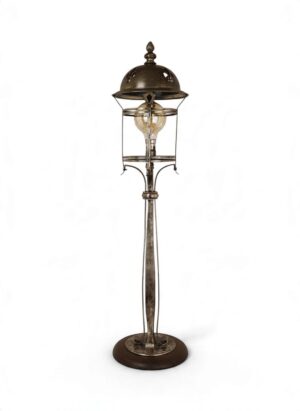
Art Deco lighting is lighting designed in the Art Deco style of the 1920s and 1930s, a period when electric light became widespread in homes and designers embraced it as a modern medium. Typical forms include ceiling plafonniers, pendant bowls, wall lights, table lamps, figural lamps and uplighters.
French glassmakers produced some of the most striking examples, with Lalique, Daum, Sabino and Muller Frères making moulded or acid-etched glass shades and bowls, while metalworkers such as Edgar Brandt designed wrought-iron fittings of great quality. Chrome, nickel, bronze and silvered metal were favoured, often combined with frosted or opaline glass to give a soft, even glow. In Britain, large numbers of pendant bowls, wall lights and chrome table lamps were produced for the domestic market. Figural lamps with spelter or bronze dancers holding glass globes are another characteristic type. Buyers should check that glass is free from chips and cracks, that metal fittings are original, and that pieces have been rewired and tested to current safety standards before use.