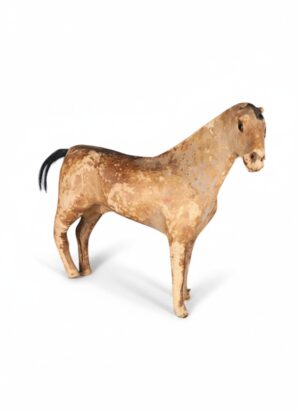
Equestrian sculpture is sculpture depicting a horse, usually with a rider, although the term is also used for studies of horses alone. Monumental equestrian statues have long been used to commemorate rulers and military leaders, while smaller bronzes and figures of horses and riders have been popular as decorative and sporting works of art.
The tradition derives from antiquity, and the bronze statue of Marcus Aurelius in Rome became the model for Renaissance masterpieces such as Donatello's Gattamelata in Padua and Verrocchio's Colleoni monument in Venice. In Britain, notable examples include the statue of Charles I at Charing Cross by Hubert Le Sueur. The nineteenth century saw an explosion of smaller equestrian bronzes, led by French animalier sculptors such as Pierre-Jules Mêne, Isidore Bonheur and Antoine-Louis Barye, and by English sculptors including John Willis Good. Racehorses, hunters, jockeys, cavalry officers and Arab horsemen were favoured subjects. Collectors look for fine casting, crisp chasing, a rich original patina, foundry marks and signatures, and anatomical accuracy. Later recasts and spelter copies are plentiful, so understanding casting quality is important when assessing value.