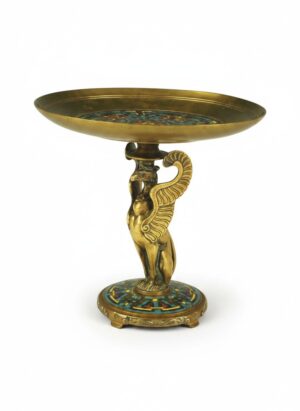
A griffin, also spelled griffon or gryphon, is a mythical creature with the body, tail and hind legs of a lion and the head, wings and front talons of an eagle. Combining the king of beasts with the king of birds, it symbolised strength, vigilance and the guarding of treasure, and it has been used as an ornamental motif for thousands of years.
Griffins appear in the art of the ancient Near East, Greece and Rome, where they were carved on friezes, temples and tombs. Medieval heraldry adopted the griffin as a popular charge on coats of arms and crests, and it appears frequently in British civic and family heraldry. The Renaissance revived classical griffins as part of grotesque ornament, and they became a favourite motif of Neoclassical designers, including Robert Adam, who used them in friezes, ceilings and furniture. Regency and Empire furniture often features griffin supports and monopodia, and the motif occurs on candelabra, firedogs, silver, mirrors and garden ornaments. In Victorian Gothic Revival work it also appears as a finial. Griffins carved in wood or stone, or cast in bronze or iron, remain striking decorative pieces, bringing a sense of heraldic grandeur to halls, libraries and gardens.