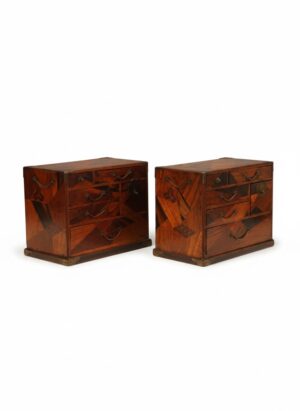
A museum cabinet is a piece of storage or display furniture made for museums, universities, scientific institutions or serious private collectors, designed to protect and present specimens and artefacts. The term covers both glazed display cases, often with large panes of glass on several sides, and solid cabinets fitted with banks of shallow drawers for natural history, mineral, coin or archaeological collections.
Most antique museum cabinets date from the Victorian and Edwardian periods, when public museums and amateur collecting flourished and specialist cabinetmakers supplied institutions in mahogany, oak, walnut and pine. Entomological and specimen cabinets were made with close-fitting drawers, glazed lids and tight seals to keep out dust and pests, often numbered and fitted with brass label holders. Large glazed display cases, sometimes on stands or with sloping tops, were made for galleries and shop interiors. Collectors look for original glass, locks, labels and drawer interiors, good proportions and well-made joinery, and a known institutional provenance can add interest. Rot, alterations and missing drawers affect value. In homes, museum cabinets are prized for their quiet elegance and practicality, used to display collections, store papers and textiles, or bring an air of scholarly order to a library, kitchen or shop.