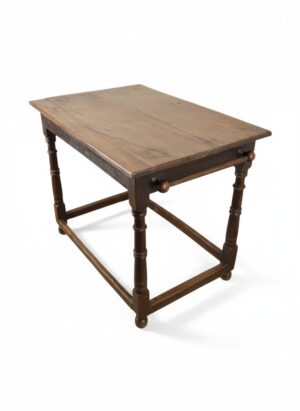
Provincial furniture is furniture made outside the main fashionable centres, such as London or Paris, by cabinetmakers and joiners working in regional towns and the countryside. It typically follows the styles of the capital, but in a simplified, delayed or locally adapted form, and is often made from native timbers.
In England, provincial makers produced furniture in oak, elm, fruitwoods, yew and later mahogany, interpreting fashionable designs for local gentry, farmers and tradesmen. A provincial chest or chair might combine Chippendale or Hepplewhite elements with older construction methods and regional features, and some areas developed recognisable styles, such as Lancashire and Welsh dressers or Thames Valley chairs. In France, the term is widely used for furniture from regions such as Provence, Normandy and Brittany, often with carved decoration in walnut or fruitwood. Provincial furniture is valued for its honest construction, individual character and fine surface colour, and pieces with original patina command a premium. It can be difficult to date precisely because styles persisted locally for many years. Provincial pieces suit country houses, farmhouses and relaxed interiors, and combine well with more formal furniture in larger rooms.