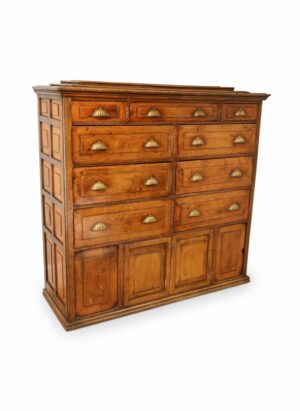
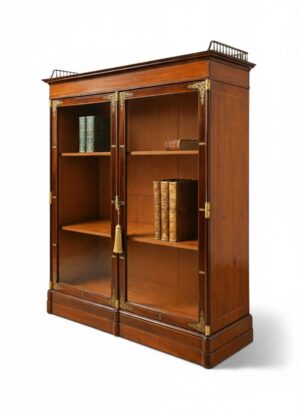
Serving furniture is the group of pieces designed to hold, display and dispense food and drink in a dining room, as distinct from the table at which diners sit. It includes sideboards, serving tables, side tables, buffets, dumb waiters, butler's trays, cellarettes and wine coolers, plate buckets, pedestals and urns, and the dressers of country houses.
The development of the dining room as a separate room in eighteenth-century English houses created demand for such furniture. Robert Adam designed side tables flanked by pedestals and urns that housed cellarets, warmers and cutlery, a scheme that led directly to the Georgian sideboard with its drawers and cupboards. The Regency and Victorian periods added massive pedestal sideboards, carved mahogany serving tables and tiered buffets, often with mirror backs. Collectors look for good figure, original surfaces and fittings such as lead-lined drawers and divisions, and they check that pedestals and tables are original pairings. Many large Victorian pieces are today undervalued for their quality. In contemporary interiors, serving furniture offers generous surfaces for lamps, displays and drinks trays, and it is as useful in a hall or drawing room as in a dining room.