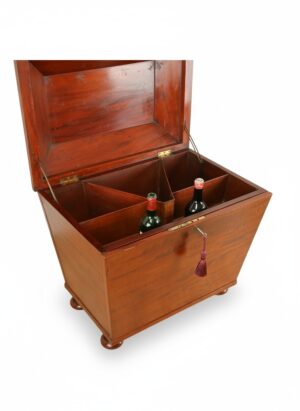
William & Mary is the name given to the style of English furniture and decorative arts associated with the joint reign of William III and Mary II, who came to the throne in 1689. As a stylistic term it is often stretched to cover the period from about 1688 to 1702, when strong Dutch and French Huguenot influences reshaped English taste.
The style is characterised by walnut veneers, often richly figured or decorated with floral and seaweed marquetry, together with oyster veneering, crossbanding and japanned or lacquered surfaces. Typical forms include chests on stands with trumpet-turned or barley-twist legs and flat, shaped stretchers, bun feet on chests of drawers, tall-backed chairs with caned seats and carved crestings, gateleg tables, cabinets on stands and early bureaux. The designer Daniel Marot, a Huguenot who worked for William, had great influence on interiors, textiles and furniture, particularly at Hampton Court. The taste for Chinese porcelain and Delftware displayed in tiers also flourished. Genuine William and Mary furniture is rare and should be examined carefully for replaced feet, later marquetry and reveneering. Original colour and surface are particularly valued.