English Baroque is the name given to the bold, monumental style of architecture and decoration that flourished in England from roughly the 1660s to the 1720s. It drew on the Baroque of Italy and France, with its massing, movement and dramatic effects, but in England it was generally interpreted with more restraint and a strong sense of Classical order.
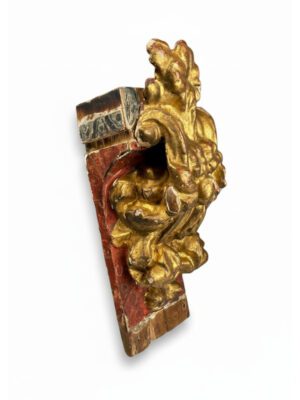
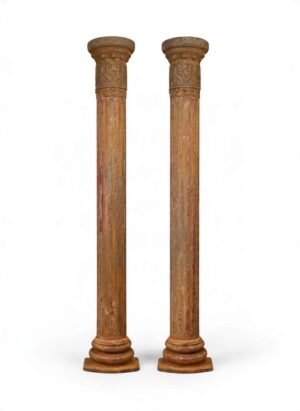
The style is closely associated with Sir Christopher Wren, whose St Paul's Cathedral and work at Greenwich and Hampton Court defined the period, and with his younger contemporaries Nicholas Hawksmoor, Sir John Vanbrugh and Thomas Archer. Vanbrugh and Hawksmoor's Castle Howard and Blenheim Palace show the style at its most theatrical, with grand silhouettes, giant columns, domes, towers and powerful stonework, while Hawksmoor's London churches are among its most original works. Interiors of the period featured painted ceilings and staircases, bolection-moulded panelling and richly carved woodwork in the manner of Grinling Gibbons. From around 1715 the style fell out of favour as a new generation promoted the stricter Palladian architecture. For collectors and designers, English Baroque informs the furniture, carving and architectural fittings of the late Stuart and early Georgian years, and salvaged elements such as carved overdoors and bolection chimneypieces are keenly sought.