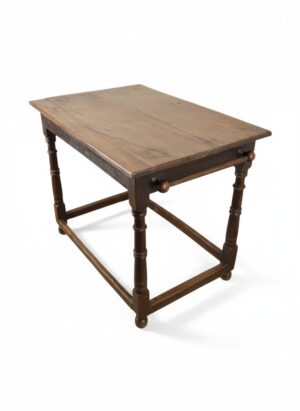
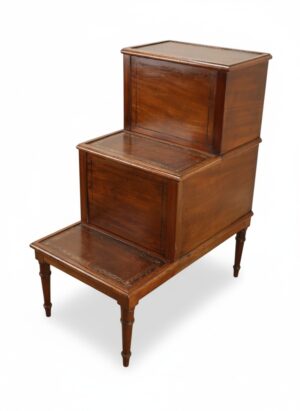
Turned legs are furniture legs shaped on a lathe, producing a rounded profile made up of rings, balls, vases, balusters, reeds or spirals. They are one of the most common forms of leg found on tables, chairs, stools, cabinets and beds, and their style is often a helpful guide to the date and origin of a piece.
The shape of turned legs changed with fashion. Bulbous cup-and-cover forms are typical of Elizabethan and Jacobean oak, while ball, bobbin and baluster legs appear on seventeenth-century country furniture, and spiral barley-twist legs are characteristic of the later Stuart period. Cabriole legs largely replaced turning on fashionable furniture in the early eighteenth century, but turning returned with the slender tapering and reeded legs of Sheraton and Regency designs. Victorian makers revived almost every historic turned pattern, and turned legs remained standard throughout the Edwardian period. When examining antique furniture, collectors look for crisp detail, slight variations between legs that indicate hand turning, consistent colour and wear, and evidence that legs have not been replaced, shortened or reduced in height, since alterations are common on old tables and chairs.