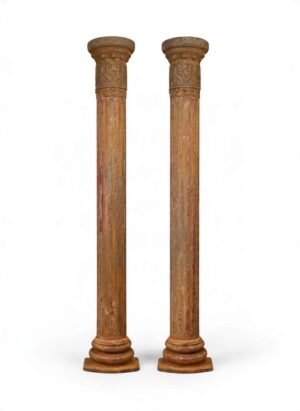
A veranda is a roofed, open gallery or platform running along the outside of a building, usually at ground level, providing shelter from sun and rain and a transitional space between the house and garden. The word entered English through India, where such galleries were common on colonial bungalows and houses.
Verandas became fashionable in Britain during the late eighteenth and Regency periods, when the taste for the picturesque, villas and seaside resorts encouraged lighter, more open buildings. Regency verandas often had elegant canopies of curved or tented sheet metal supported on slender cast or wrought iron columns with decorative tracery, and many examples survive in Brighton, Cheltenham and London terraces. The Victorians built timber and cast iron verandas on villas, cottages orné and seaside houses, and the form was widely adopted across the British Empire, America and Australia. Furniture designed for verandas includes cane and wicker chairs, steamer chairs, plantation chairs and cast iron benches. Architectural salvage dealers handle original veranda columns, brackets and ironwork, which are prized for restoration projects and for adding period character to garden buildings.