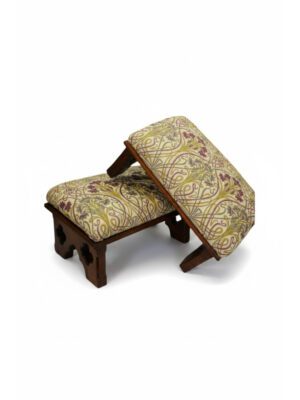
A prie-dieu, from the French for pray to God, is a piece of furniture designed for private prayer. In its original form it is a small desk with a low kneeling step and a sloping or flat ledge on which to rest a prayer book or the elbows; the name is also given to a type of low-seated Victorian chair with a tall, straight back topped by a broad padded rail.
Prayer desks of this kind were used in Europe from the late medieval period, in private chapels, bedchambers and oratories as well as in churches. The prie-dieu chair became fashionable in Britain in the early and mid Victorian period, reflecting both religious revival and the taste for the Gothic. Its low seat allowed the user to kneel on it and lean on the padded top rail, and it also served as a comfortable occasional chair. Many were covered in Berlin woolwork, with brightly coloured floral or figurative designs stitched at home, and frames were made in walnut, rosewood, mahogany or ebonised wood with turned or barley twist supports. Collectors look for original needlework in good condition, a sound frame and well-proportioned carving.