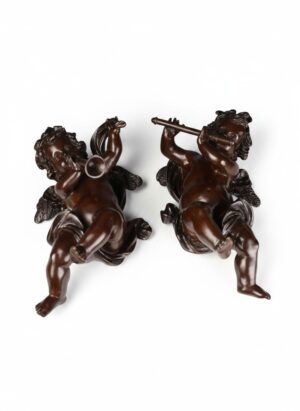
Allegorical sculpture is sculpture in which figures represent abstract ideas, virtues, seasons, elements, continents, arts or other concepts, rather than particular individuals. A female figure holding scales and a sword, for example, personifies Justice, while figures bearing wheatsheaves, flowers or grapes may represent the seasons or abundance.
The tradition draws on classical antiquity and was developed extensively during the Renaissance and Baroque periods, when sculptors produced allegorical figures for churches, palaces, tombs, fountains and gardens. Sets of the Four Seasons, the Four Elements, the Liberal Arts and the Continents became popular in marble, stone, lead and bronze, and later in porcelain, spelter and cast iron. Nineteenth-century French sculptors in particular produced allegorical bronzes of Fame, Victory, Science and Industry for a growing bourgeois market, often cast by leading foundries. In Britain, allegorical figures appear on public monuments, chimneypieces and garden ornament. Collectors look at the quality of modelling and casting, signatures and foundry marks, and the presence of identifying attributes, which help interpret the subject. Allegorical figures work particularly well as focal points in gardens, halls and formal interiors.