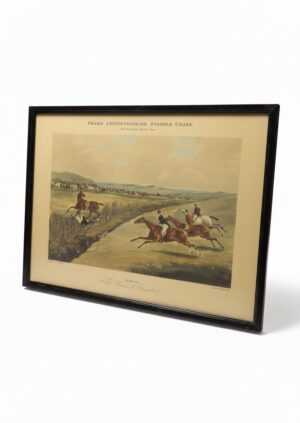
Aquatint is an intaglio printmaking technique used to create areas of tone that resemble watercolour or ink wash. A copper or zinc plate is dusted with a fine resin powder, which is heated so that it fuses to the plate in tiny particles, and the plate is then immersed in acid, which bites into the exposed metal between the grains to create a textured surface that holds ink.
By controlling how long different areas are exposed to the acid, the printmaker can achieve a range of tones from pale grey to deep black. Aquatint was perfected in France in the 1760s, building on earlier Dutch experiments, and was refined and popularised in Britain by the artist Paul Sandby, who coined its name. It became enormously popular in late eighteenth and early nineteenth-century Britain for topographical views, sporting scenes and illustrated books, many of which were hand-coloured, with publishers such as Rudolph Ackermann producing celebrated series. Francisco Goya used it to powerful effect in his print series. Collectors look for strong early impressions, fresh original hand colouring, good margins and an absence of foxing or trimming. Aquatints are often framed in sets and look particularly well in libraries, halls and country-house corridors.