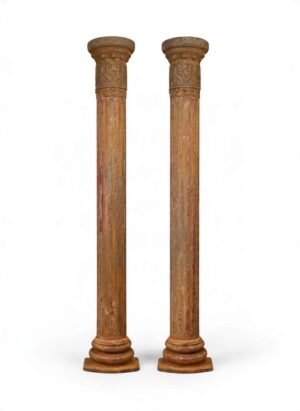
An architectural garden is a garden in which built structure and strong geometric design are as important as the planting. Terraces, steps, balustrades, walls, paved paths, pools, pergolas, clipped hedges and carefully placed statues, urns and seats create a series of outdoor rooms with a clear framework.
The approach draws on Italian Renaissance and French formal gardens, which reached Britain in the seventeenth century before giving way to the landscape movement. It returned in Victorian terraced gardens and, most influentially, in the Edwardian period, when designers such as Edwin Lutyens and Gertrude Jekyll and Harold Peto combined fine stonework with generous planting. Lawrence Johnston's Hidcote and Vita Sackville-West's Sissinghurst developed the idea of linked garden rooms. Antique garden ornament is central to the style: weathered stone and cast iron urns, lead figures, sundials, troughs and old stone steps give instant age and structure to a new garden. When choosing pieces, scale and proportion matter as much as quality, and a few substantial, well-placed elements usually work better than many small ones scattered across a lawn.