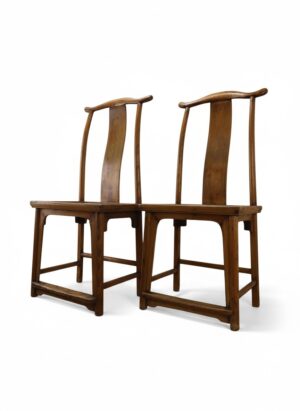
A chair is a seat for one person, usually with a back and often with arms, and it is one of the most varied and expressive forms of furniture. Chairs have been made in an enormous range of styles and materials, and their design has always reflected both fashion and social customs.
In medieval and Tudor England, chairs were rare and signified status, with most people sitting on stools and benches. From the late seventeenth century, chairs became more common and specialised, leading to dining chairs, side chairs, armchairs, hall chairs, library chairs, corner chairs, wing chairs, bergères and nursing chairs, among many others. Eighteenth-century designers such as Chippendale, Hepplewhite and Sheraton produced influential designs, while country makers developed Windsor, ladder-back and spindle-back chairs. The Victorian period brought balloon-back and button-back chairs, and the twentieth century introduced bentwood and modernist designs. When buying antique chairs, check for loose joints, repairs and later replacements, and remember that sets of matching chairs are more valuable than singles.