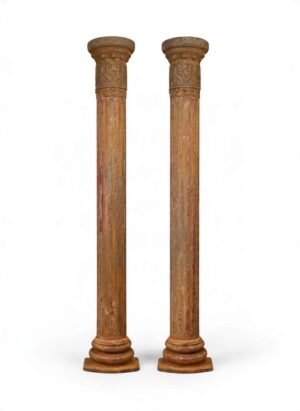
Cornice moulding is the decorative band of profiled plaster, timber or stone that runs along the junction between a wall and ceiling, or crowns the top of a building, a door case or a piece of furniture. Derived from the uppermost section of the classical entablature, it disguises the joint between surfaces, casts attractive shadows and gives a room a sense of finish and proportion.
In British houses the most elaborate cornices date from the Georgian and Victorian periods, when plasterers ran profiles in situ using a shaped template and added cast enrichments such as dentils, egg-and-dart, acanthus, modillions and Greek key. The depth and complexity of the cornice usually reflected the importance of the room, so a drawing room or dining room might have a deep, enriched design while bedrooms and service rooms received simpler profiles. Cabinetmakers also used cornice mouldings to top bookcases, wardrobes, linen presses and longcase clocks. When restoring a period interior, matching the original profile is important, and specialist firms can take a section of surviving cornice to reproduce missing lengths in lime-based or fibrous plaster.