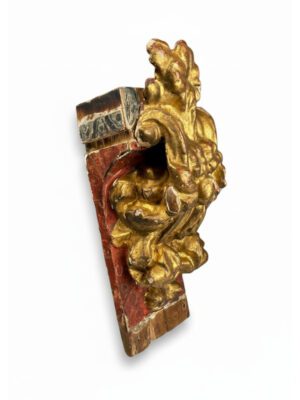
Dentil moulding is a classical ornament made up of a row of small, evenly spaced rectangular blocks, resembling a line of teeth, set beneath a projecting moulding. The name comes from the Latin dens, meaning tooth. The blocks, known as dentils, are separated by narrow gaps and usually run continuously along a cornice, giving a strong rhythm of light and shadow when seen from below.
Dentils are thought to recall the ends of timber roof joists in early Greek temples, translated into stone. In the classical orders they are most closely associated with the Ionic and Corinthian cornices, and they were adopted enthusiastically by Renaissance and Palladian architects. In Britain dentil moulding became a standard feature of Georgian and Regency design, appearing on external cornices, doorcases and pediments and, inside, on plaster ceiling cornices, chimneypieces, overdoors and bookcases. Cabinetmakers used it on the cornices of bureau bookcases, linen presses, longcase clock hoods and breakfront cabinets, and Victorian builders continued to apply it widely. Well-executed dentils are cut or cast with sharp, regular spacing and are proportioned to the moulding above. On furniture, crisp dentils that match the rest of the cornice are a sign of quality, while missing or replaced blocks are common minor repairs.