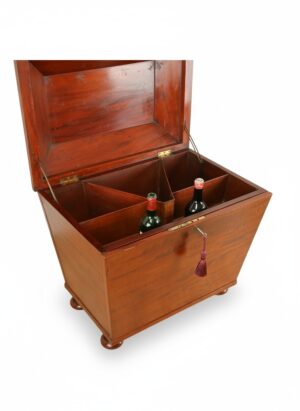
Crossbanding is a decorative border of veneer in which narrow strips of wood are laid with the grain running across the width of the band, at right angles to the edge they decorate. It is used to frame the tops, drawer fronts, doors and aprons of veneered furniture, providing contrast with the main field of veneer.
The technique became widespread in English furniture with the rise of walnut veneering in the late seventeenth and early eighteenth centuries, when cabinet makers framed walnut drawer fronts and tops with crossbanding, sometimes combined with feather or herringbone banding. It remained an essential part of the cabinet maker's vocabulary through the Georgian and Regency periods, particularly on mahogany furniture, where bands of satinwood, tulipwood, rosewood, kingwood or harewood were set against the main timber. As well as being decorative, crossbanding protected the vulnerable edges of veneered surfaces. When examining a piece, collectors look at whether the banding has faded consistently with the rest of the surface, signs of lifting or loss along the edges and whether it is original. Crossbanding was sometimes added later to plain pieces to increase their appeal, so careful inspection is worthwhile.