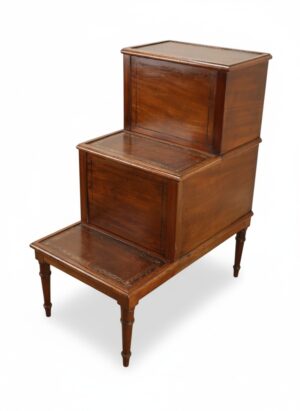
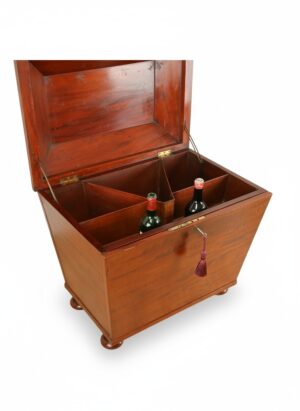
Wood veneer is a thin sheet of timber, sliced or sawn from a log, that is glued onto a more stable or less expensive base to create a decorative surface. Veneering allows rare and beautifully figured woods to be used economically and makes possible patterns that could not be achieved in solid timber.
Veneering was known in the ancient world, but in England it became a mainstay of fine furniture from the later seventeenth century, when walnut veneers were laid over oak or pine carcases. Mahogany, satinwood, rosewood and exotic woods followed in the Georgian and Regency periods. Early veneers were hand-sawn and relatively thick, while nineteenth-century machinery produced thinner, more uniform sheets. Cabinetmakers arranged veneers to exploit their figure through techniques such as book-matching, quartering, oyster veneering, crossbanding, marquetry and parquetry, using burrs, curls and fiddleback figures for maximum effect. Veneer is often wrongly seen as inferior to solid wood, yet much of the finest antique furniture is veneered. Collectors check for lifting, blistering, losses and patched repairs, and judge the quality of the figure, the precision of the matching and whether the veneer is original to the piece.