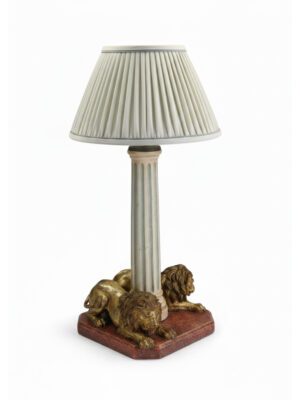
A Doric column is a column of the Doric order, the simplest and most robust of the classical orders. In its original Greek form it stands directly on the floor of the temple without a separate base, with a sturdy shaft cut with shallow flutes meeting at sharp edges, and a plain capital consisting of a cushion-shaped echinus beneath a square slab called the abacus.
The Doric column was developed in the Greek world from around the seventh century BC and can be seen at its finest in the Parthenon in Athens and the temples of Paestum in southern Italy. The Romans adapted it, often adding a base and sometimes leaving the shaft unfluted, and this Roman Doric was widely used in Renaissance and Georgian architecture. From the later eighteenth century, the rediscovery of the Greek temples led to a fashion for the more severe Greek Doric, which became a hallmark of the Greek Revival in Britain in public buildings, porticos and even railway stations. In furniture and decorative arts Doric columns appear on chimneypieces, bookcases, pedestals, clock cases, candlesticks and lamp bases. The order's plain, strong character conveys solidity and restraint, and its forms remain popular for classical interiors and architectural salvage.