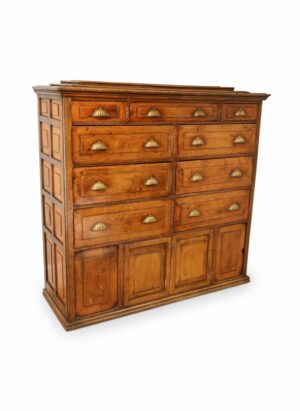
An Edwardian sideboard is a dining-room cabinet made in Britain during the reign of Edward VII (1901–1910), the term often stretched to cover pieces made up to the First World War. It provided storage for table linen, cutlery, glass and silver, a top for serving and display, and usually a combination of drawers and cupboards, sometimes with a cellaret drawer for bottles. Mahogany and oak were the main timbers, with satinwood used for crossbandings and inlay on the better examples.
Edwardian furniture makers drew heavily on the eighteenth century, and many sideboards are revivals of Sheraton and Hepplewhite designs, with bowed or serpentine fronts, tapering square legs, boxwood stringing, shell or fan inlays and brass gallery rails. Others follow the Arts and Crafts and Queen Anne revival tastes in oak, often with a raised mirror back or open shelves. The large London and regional retailers produced them in quantity, and quality varies widely. Look for good figured veneers, crisp inlay, solid cockbeaded drawers and original handles, and check that a mirror back has not been removed. A well-made example remains a practical and handsome piece for a dining room or wide hall today.