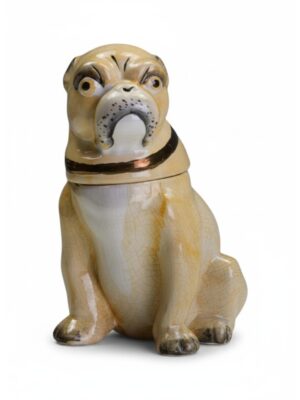
English pottery refers to earthenware and stoneware made in England, as distinct from porcelain. It includes a remarkable variety of wares, from robust country slipware and lead-glazed jugs to finely potted creamware and pearlware, transfer-printed tableware, Staffordshire figures and Victorian art pottery.
In the seventeenth century potters such as Thomas Toft produced decorated slipware chargers, while tin-glazed delftware was made in London, Bristol and Liverpool. Salt-glazed stoneware flourished at Fulham, Nottingham and Staffordshire, and by the mid-eighteenth century Staffordshire had become the centre of the industry. Josiah Wedgwood, Whieldon and their contemporaries developed refined cream-coloured earthenware that was exported throughout the world, and underglaze blue transfer printing made patterned tableware available to ordinary households. Nineteenth-century production included lustreware, ironstone, Staffordshire flatback figures and majolica, while Doulton and other firms produced art stoneware. Collectors look for good potting, crisp moulding or printing, pleasing colour and minimal damage. Marked pieces and documented makers are valued, but much attractive English pottery is unmarked and is judged on its quality and character.