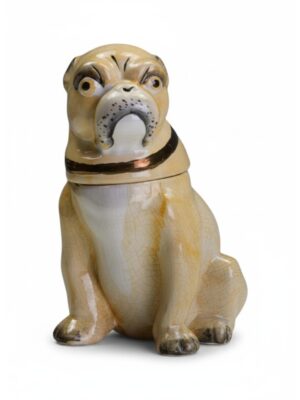
Staffordshire is the English county whose Potteries district, centred on the towns now forming Stoke-on-Trent, became the heart of the British ceramics industry. In antiques the name is used both for the wide output of the area's many factories and, more specifically, for the popular earthenware figures made there in the eighteenth and nineteenth centuries.
Local supplies of clay and coal supported potteries from the seventeenth century, and the region rose to international importance in the eighteenth century through innovators such as Josiah Wedgwood, Thomas Whieldon and the Wood family, who developed salt-glazed stoneware, creamware, jasperware and black basalt. Factories including Spode, Minton, Davenport, Copeland and Doulton followed, producing transfer-printed blue and white earthenware, bone china and ironstone in great quantities. Staffordshire figures, particularly the flat-backed Victorian chimney ornaments of dogs, royalty, politicians and theatrical subjects, are widely collected, with pairs of spaniels the most familiar. Collectors look for crisp moulding, good original enamel colours and gilding, and condition, while being alert to the many later reproductions with harsh colours and artificially induced crazing. Factory marks help with dating, though many figures were never marked.